

Specialized Electrolux Appliance Repair in San Francisco
Mon–Sat: 8:00 AM – 7:00 PM
A wine cooler that drifts warm and cold is stressing the bottles. See what typically causes the swings in a built-in Electrolux unit and which checks you can do before booking.
A wine cooler is a small, precise refrigerator. It holds a narrow range for a long time, so you notice the swings that a regular fridge hides. Maybe the display shows one number in the morning and another in the evening, or a bottle near the front feels cooler than one at the back. Maybe the unit seems to run all afternoon and rest all night. Swings like those have a few common sources, and the first ones are about the room, not the machine.
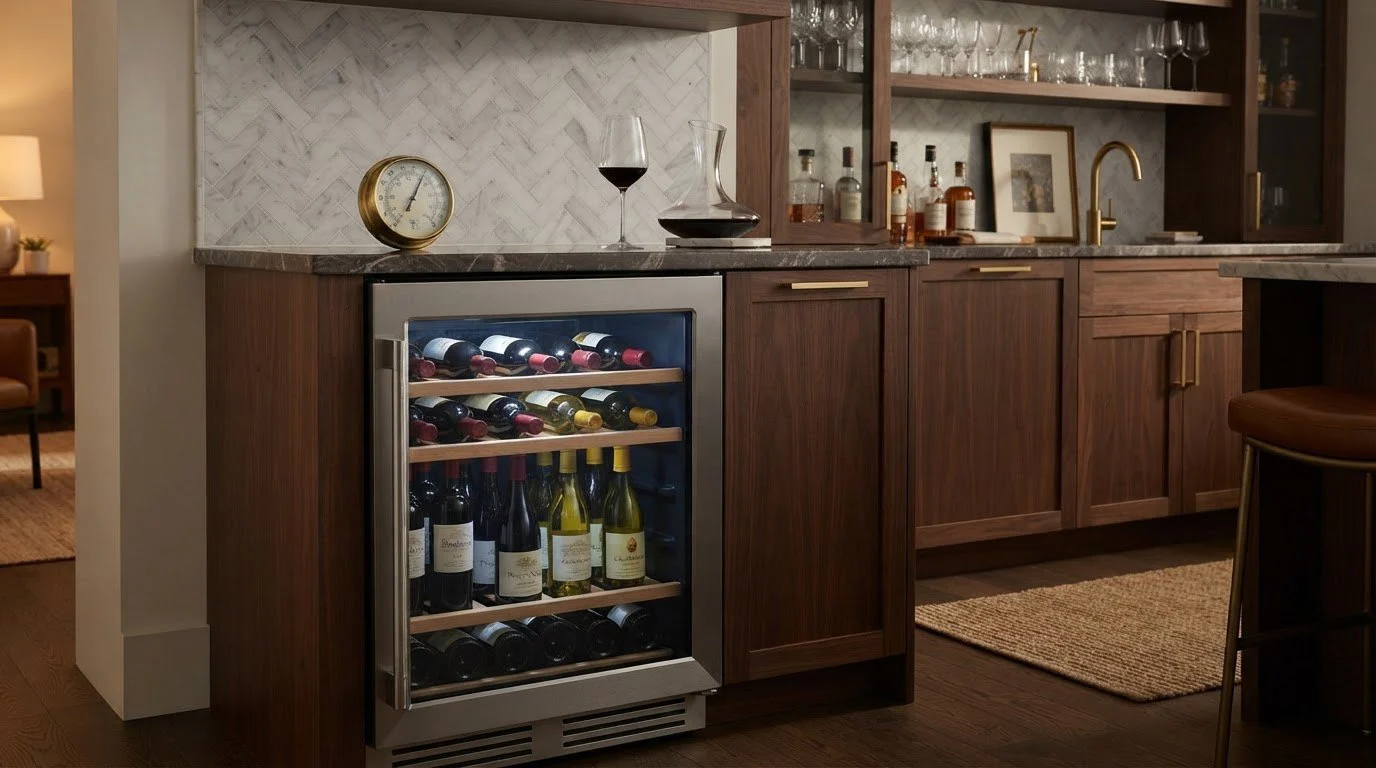
Built-in coolers like the 24-inch Electrolux EI24WC15VS are designed to sit under a counter or in a tall run of cabinets, and they release heat through their front grille. If the cabinet around them traps that heat, or the sun hits the front, or a dishwasher or oven sits beside them, they run harder in the afternoon and recover at night. Many San Francisco kitchens are small and tightly fitted, which makes this more likely than you would expect.
Bottles pressed against the rear wall, cartons stacked on shelves, or labels covering vents keep cold air from circulating. The sensor then reads a local temperature that does not match the bottles. Let air move around the cases, and keep the grille opening free of dust and boxes.
Wine coolers have glass doors with frames and gaskets. A gasket that is dirty, curled or compressed unevenly lets room air creep in, and each recovery cycle overshoots. Look for a thin line of condensation along the door edge, or run your hand along the frame to feel for a draft.
Adding a warm case of bottles, or opening the door often during a party, drags the average up and then the cooler overshoots down as it recovers. That kind of swing is expected and settles on its own.
Dual-zone settings, a change of unit from Fahrenheit to Celsius, or an accidental press on the touch panel can move the target. Compare the display with what you set.
If room, door and loading all look normal, a sensor reading wrongly, a fan that runs unevenly, or a cooling system that is losing capacity could be involved. Those are components behind the interior or in the base, and they need a technician with the right instruments.
Corks and labels respond to repeated warming and cooling, and a cooler that cycles through a wide range stresses the contents more than one that holds a slightly different but steady number. If you collect bottles for years, a stable cabinet is worth more than hitting an exact figure. Keep a simple note of the display reading at the same time on a few days. A pattern, such as warmer every afternoon, points to the room, while random jumps point toward the sensor or the control.
Placement of the thermometer matters too. A reading taken on the door shelf will always differ from one in the middle of the racks, so leave the probe in the same spot every time. If you use the cooler for both reds and whites in separate zones, check each zone on its own, since one zone drifting while the other holds steady narrows the cause to that zone’s airflow or sensor.
Book when the readings on a separate thermometer still wander after the room and load are sorted, when condensation or frost shows around the door, when the compressor seems to run constantly, or when an alarm keeps returning. We diagnose first, give a written estimate, and repair nothing until you approve. If the bottles are valuable, move them to a cooler place while you wait.
The label is typically inside the cabinet, on a side wall near the door opening. Photograph it, and note any display messages. For more on how these visits work, see Electrolux wine and beverage cooler repair and the Electrolux wine and beverage coolers guide. A fridge sharing the same kitchen wall is often affected by the same ventilation issue, so you may also find Electrolux refrigerator runs constantly useful.
Small changes after opening the door or loading bottles are normal and settle on their own. Large, repeated drifts through the day suggest airflow, seal or placement problems.
Yes. Heat from an oven, dishwasher or sun on the front makes the cooler work harder in the afternoon, then it recovers at night.
Use it as a guide, and confirm with a separate thermometer among the bottles for several hours. A mismatch is worth mentioning when you book.
Light moisture in humid weather can be normal. A steady wet line or frost at the edge points to a seal or airflow problem.
Only if it is designed for that installation. Built-in models need clear ventilation at the front, and a closed surround can trap heat.
Share a few details and we’ll confirm an appointment. Prefer to talk? Call us and we’ll help right away.