

Specialized Electrolux Appliance Repair in San Francisco
Mon–Sat: 8:00 AM – 7:00 PM
Frost or ice along the front lip of a freezer drawer almost always means warm, humid air is getting in. Find out how to trace the leak, what to clear, and when the seal or defrost system needs a technician.
Open the drawer of a freezer and look at the rim where the gasket meets the cabinet. A thin dusting of frost there is not unusual. Thick, crunchy ice that spreads along the edge, grows from week to week, or makes the drawer stick is a different matter. That ice is condensed moisture from room air, and the air got in because something stopped the drawer from sealing.
The freezer is far colder than the kitchen. When the drawer is not fully closed, or the seal is imperfect, humid air slips past the gasket and meets cold metal and plastic at the lip. The moisture freezes where it lands. Over time the ice itself stops the gasket from compressing, so the gap grows and the frost accelerates. That feedback loop is why a small leak turns into a thick ridge.
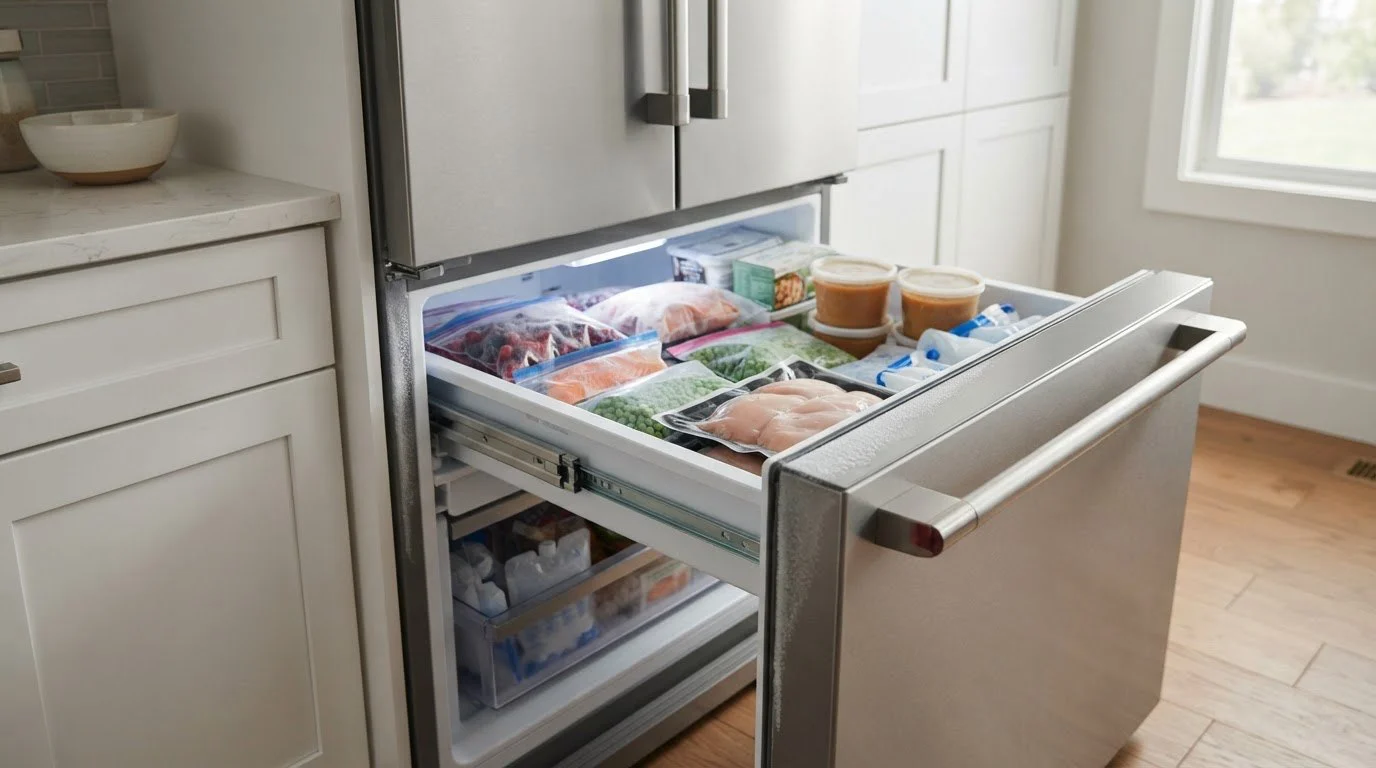
If a bag of frozen vegetables, a tray, or a tall box rises above the basket rim, the drawer front rides up and leaves a gap. Look from the side as you slide it shut. The front panel should come to rest evenly against the cabinet.
Gaskets harden with age, and a corner that has been pinched or folded stays flat. Run a fingertip along the sealing surface and feel for a ripple. A dirty gasket can also stick to the frame and tear as the drawer opens.
A unit that tilts forward, or a drawer that sits slightly crooked on its slides, closes against the frame unevenly. On 24-inch and 33-inch built-in drawer and column units, the surrounding cabinetry can also press on the sides and bow the front.
Kitchens in older San Francisco buildings can be damp, and cooking steam drifts toward the freezer. A drawer opened often during meal prep lets in more moisture. This alone raises frost, even with a perfect seal.
If frost also builds on the back wall, the vents, or the evaporator area, the defrost system may not be clearing it, and the airflow then shifts. Ice at the front edge combined with ice at the rear suggests the issue is bigger than the seal. Our article on Electrolux refrigerator runs constantly explains the airflow side of that.
If the unit has to be defrosted because ice blocks the drawer, switch it off, move the food to a cooler or another freezer, leave the drawer open on towels, and let the ice melt on its own.
Once the ice is gone and the seal is sound, small habits keep it that way. Let steaming dishes cool before they go in, wrap loose food so it does not release moisture, and close the drawer with a steady push instead of letting it drift. Check the gasket each time you clean the kitchen. If the frost reappears in the same spot, mark where it forms: a patch at one corner suggests a seal fold or a crooked slide, while a ridge along the whole front suggests an overfull basket or a leaning cabinet.
Call when the frost returns within days of a clean-up, when the gasket is damaged, when the drawer will not close even after you empty it, or when frost spreads to the back wall. A diagnosis separates a worn seal from a misaligned drawer from a defrost fault, and you receive a written estimate afterward. We repair nothing unless you approve it.
A single-drawer freezer such as the Electrolux EI33AF80WS, listed as a 33-inch freezer, has its own seal and slide design, which is why the label matters. It is usually found at the edge of the drawer opening or inside the cabinet frame. Learn more on the Electrolux freezer repair page, and see the family overview in Electrolux freezers. If a combination unit in your kitchen shows a code, the list at Electrolux refrigerator OP freezer explains the open freezer thermistor display.
A thin layer after frequent opening can happen. Thick, growing ice that sticks the drawer means air is leaking in and the seal or fit needs attention.
Yes. Anything above the basket rim holds the drawer front out and leaves a gap that lets humid air in.
No. Let the ice melt after switching the freezer off, and never use sharp or heated tools, since the gasket and liner are easy to damage.
Not by itself. It usually points to a sealing or fit issue. If frost also builds on the back wall or food thaws, the cooling or defrost system needs a diagnosis.
It stands for an open freezer thermistor, shown as OP in the freezer display window. It is a sensor fault that a technician should confirm.
Share a few details and we’ll confirm an appointment. Prefer to talk? Call us and we’ll help right away.