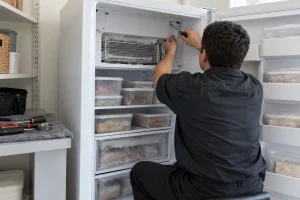
Freezer Repair in San Francisco
Soft food, heavy frost, a pooling drain or a loud fan: Electrolux freezers diagnosed and repaired across San Francisco and the Bay…

Specialized Electrolux Appliance Repair in San Francisco
Mon–Sat: 8:00 AM – 7:00 PM
A plain-language guide for owners of a built-in column or drawer freezer.
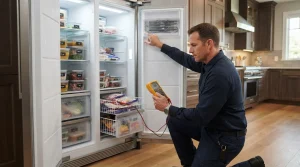
A freezer can fail quietly. Nothing beeps, the light is still on, and the first sign is a soft tub of ice cream or a thick layer of frost at the front edge. That is why freezer owners benefit from knowing the usual causes before the contents are at risk.
On this site, the freezer family starts with the EI33AF80WS, a 33-inch freezer from the ICON line, recognizable by the EI at the front of the number. Availability of that model is not something we state either way. Freezer compartments inside French-door refrigerators are covered on the refrigerator guide, because they share a cooling system with the fresh-food side.
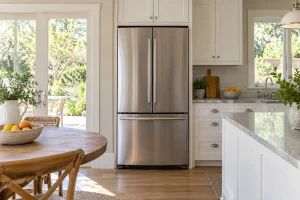
Built-in freezers are usually tall columns placed beside a refrigerator column, or sit under a counter with a front that matches the cabinets. Both rely on tight clearances and a gasket that seals well against the frame, so installation details matter more than most owners expect.
Look on the inside wall near the top, along the door frame, or at the edge of the cavity when a drawer is open. A freezer that has built up ice can hide a label; if so, photograph what you can see and tell us the rest of the details, such as the width and trim style.
Warm, humid air entering through a gasket gap freezes on the first cold surface it meets. The cause may be a gasket, a door that does not seat, or a tilted cabinet. Our article on frost along the front edge of a freezer drawer goes through those in order.
That pattern more often relates to the defrost system, which melts frost off the evaporator coil on a schedule. If the defrost heater, a sensor or the timing control misbehaves, frost accumulates until airflow is choked and the compartment warms.
A running compressor that does not produce cold may mean restricted airflow, a failed fan or a sealed-system problem. We separate those by listening, measuring and inspecting before a part is named.
Melt water from the defrost cycle normally drains away. A frozen or clogged drain line sends it into the cabinet instead.
Do not chip ice with a knife, use a hair dryer on the interior or pry at panels. Those habits damage plastic liners and sealed lines, and the repair becomes larger than the original fault.
Keep the door closed as much as possible. If the unit is clearly warming, move the most valuable items to a working freezer or a cooler, and discard anything that has thawed and stayed warm. After a general power cut, our post on appliances that beep after an outage explains what a fresh restart looks like.
We diagnose before we repair, give you a written estimate, and do nothing without your approval. Details of the visit are on the Electrolux freezer repair page, and you can ask for an appointment through contact.
The cooling is the same idea. A drawer gasket flexes differently, and drawer runners can leave the front slightly out of square, which shows up as frost at the edge.
The air near the vent may still be cold while the rest of the cavity is not moving air properly. A fan or defrost fault is a common explanation.
You can, but moving the food first matters more. A forced defrost does not fix the reason frost formed, and it should not involve tools or heat.
It helps a great deal. Please read the whole label, including letters at the end, since parts and control systems differ between versions.
Tell us the cutout width and whether it slides out. Access determines what we can inspect during the first visit.
Soft food, heavy frost, a pooling drain or a loud fan: Electrolux freezers diagnosed and repaired across San Francisco and the Bay…
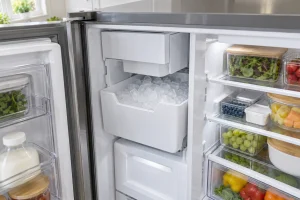
The EI33AF80WS is a 33-inch Electrolux ICON freezer. See what drawer-style freezer complaints mean and which checks to do before booking.
Electrolux cooktops include induction models in 30 and 36 inches and a 36-inch gas model. See the lineup, common complaints, codes and…
Electrolux dishwashers come in 24-inch and 18-inch widths, including the ICON line. See the lineup, where the label sits and what to…
Electrolux electric and gas dryers by series, where to find the label, display codes and the venting checks that fix many complaints…
How Electrolux ice makers work in refrigerators and built-in units, the symptoms owners report, and what to check at the water line,…
A laundry tower puts a washer and a dryer in one stacked cabinet. Here is how the Electrolux tower lineup is organized…
Electrolux built-in microwaves open either as a drop-down drawer door or a side swing. Check the lineup, label spot and safe first…
Electrolux ranges combine an oven and a cooktop in one 30- or 36-inch body, as induction or dual fuel. See the lineup,…
French-door, column and drawer refrigeration from Electrolux, with notes on model labels, display codes and what to check before booking a visit…
Electrolux 30-inch electric wall ovens come as a single oven or a microwave combination stacked in one cabinet. Learn the models, label…
Electrolux front-load and top-load washers by series, where the label is, the display codes and safe checks before you book a repair.
A guide to Electrolux under-counter wine and beverage coolers: where the label sits, why temperature drifts, what you can check and when…
Share a few details and we’ll confirm an appointment. Prefer to talk? Call us and we’ll help right away.