

Specialized Electrolux Appliance Repair in San Francisco
Mon–Sat: 8:00 AM – 7:00 PM
Hot drum, warm laundry, wet seams. When heat is present but drying is not, airflow is the first suspect. Here is how to separate a vent problem from a heating or sensing fault.
You open the door and feel the warm drum. The towels are hot on top and wet underneath. It is easy to assume the heating element has failed, but a dryer can generate plenty of heat and still dry poorly. Heat softens the water in the fabric; airflow carries that water away as vapor. Without a good stream of air through the drum and out of the building, the humidity stays inside and the clothes stay damp.
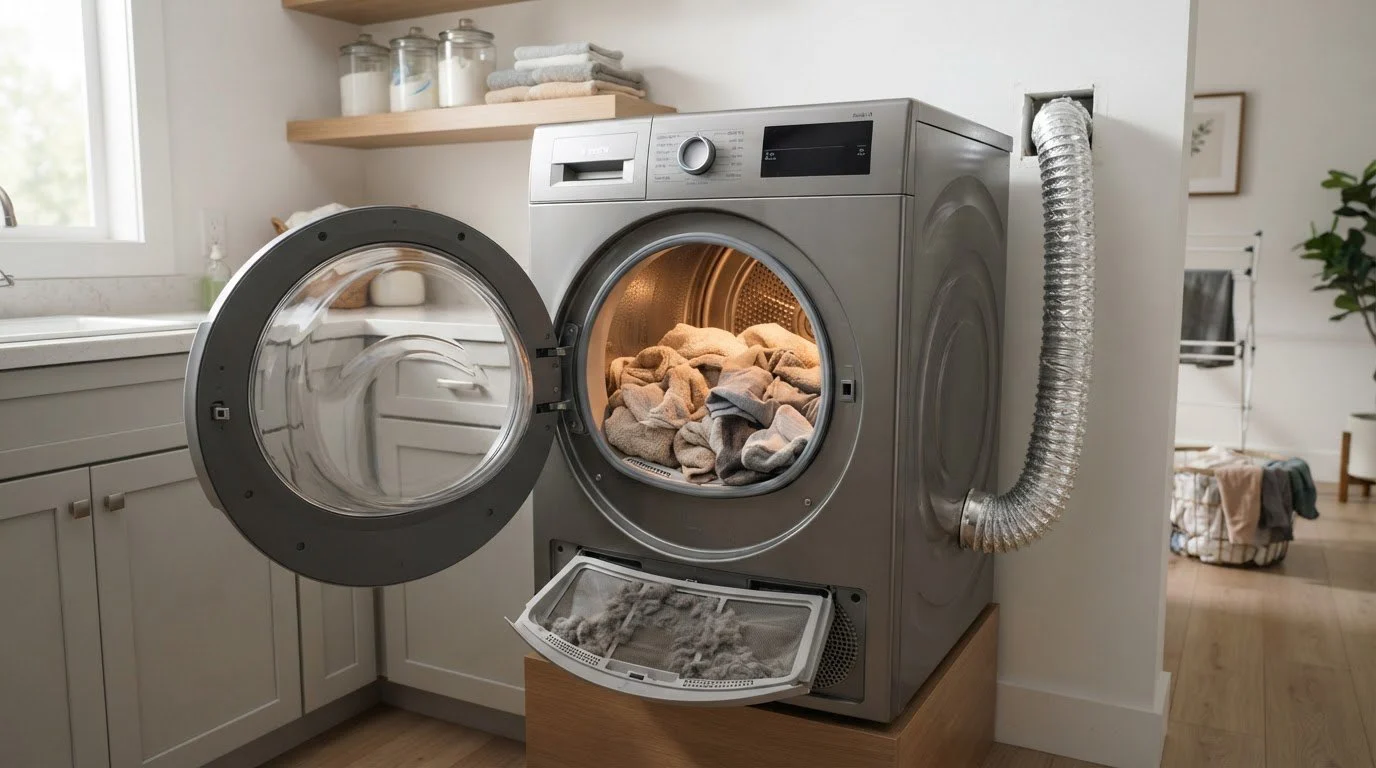
An Electrolux dryer pulls air in, heats it, passes it through the drum, and pushes it out through the lint screen and the exhaust duct. Any restriction along that path slows the whole process. The control also watches temperatures, so when the air cannot escape, the safety limits cut the heat in and out, which makes the cycle drag on or stop. The result is a hot dryer, long cycles, and a load that never quite finishes.
The manual includes EF1 for ventilation blocked, meaning the air flow duct is clogged or blocked. If you see it, the story is probably already told. The page on EF1 ventilation blocked goes through it in more detail. Not every blocked vent shows a code, though, so the checks below matter even when the display is calm.
The screen may look clean but be coated with a nearly invisible film from dryer sheets. Hold it under running water: if the water beads on the mesh instead of flowing through, the film is blocking air. A wash with warm water and mild soap and a soft brush often helps.
The slot that holds the screen can collect lint where you cannot see it. Use a long, soft attachment on a vacuum cleaner, or a lint brush, to clear the opening. Do not push anything stiff down into it.
Long, bendy runs are the usual culprit. Foil or vinyl ducts sag and trap lint; sharp elbows slow the air; a duct crushed behind the dryer almost stops it. In San Francisco, many dryers vent through a wall and up through a shaft or along a ceiling, and the longer that route, the more it matters. A duct that was fine with an older dryer can become the limit for a newer one.
Go outside while the dryer is running. The flap should open with a clear push of air. If it hardly moves, or if the opening is behind a screen packed with lint, a bird nest or paint, the air has nowhere to go.
In multi-unit buildings, a vertical shaft may serve several dryers. If it is blocked high up, only a building manager or a vent cleaning professional can reach it. Tell your manager what you found and ask for the vent run to be inspected.
If the vent is genuinely clear, other causes remain.
Do not disconnect and clean the duct while the dryer is hot or plugged in. Do not run the dryer without a lint screen to speed things up. Do not use a plastic or foil duct to replace a damaged one; a rigid or semi-rigid metal duct is the usual choice, though the right layout depends on your installation. For a gas model, smell near the dryer before you do anything else; if you detect gas, leave, avoid switches and call the gas utility or 911 from outside. If you notice a scorched smell, switch the dryer off at the breaker.
Heat source and sensing differ between gas and electric, and between front-load and top-load lines. The label is usually inside the door opening. A model such as the ELFG7437AW, a 400 Series gas dryer, depends on a burner and igniter path that an electric dryer does not share, while an electric dryer relies on an element and its limits. We read the label before choosing tests.
If the lint screen is clean, the vent is clear, the load is reasonable and clothes remain damp, book a visit. We diagnose before repairing, tell you what we find, give you a written estimate, and repair nothing without your approval. Read about the full process on the Electrolux dryer repair page.
Yes. Hot, humid air that cannot leave leaves moisture inside. The drum can feel very warm while the clothes stay wet.
You cannot tell safely from the outside alone. Weak or no heat with a clear vent suggests the element, relay or power supply, and a technician tests those.
You can clear the lint screen, the lint slot and the accessible end of the duct. Long or hidden runs should be handled by a vent cleaning professional.
It can. A very high setting asks for more drying than a restricted vent can deliver, so test once on a timed cycle for comparison.
Give the model number, whether the dryer is gas or electric, any code, the vent route and whether the outdoor flap moves.
Share a few details and we’ll confirm an appointment. Prefer to talk? Call us and we’ll help right away.