

Specialized Electrolux Appliance Repair in San Francisco
Mon–Sat: 8:00 AM – 7:00 PM
If the door of your built-in microwave pops open, will not click shut, or lets the display stay dead, stop using it. Here is what the latch system does and what you can check.
You push the door shut and it bounces back, or it closes but the light stays off and nothing starts. On a built-in microwave that is expected behavior from a protective design: the oven runs only when the door signals that it is firmly closed. When it will not latch, the question is whether something is blocking the door, or whether the part that tells the oven the door is closed has worn or shifted. This guide covers both.
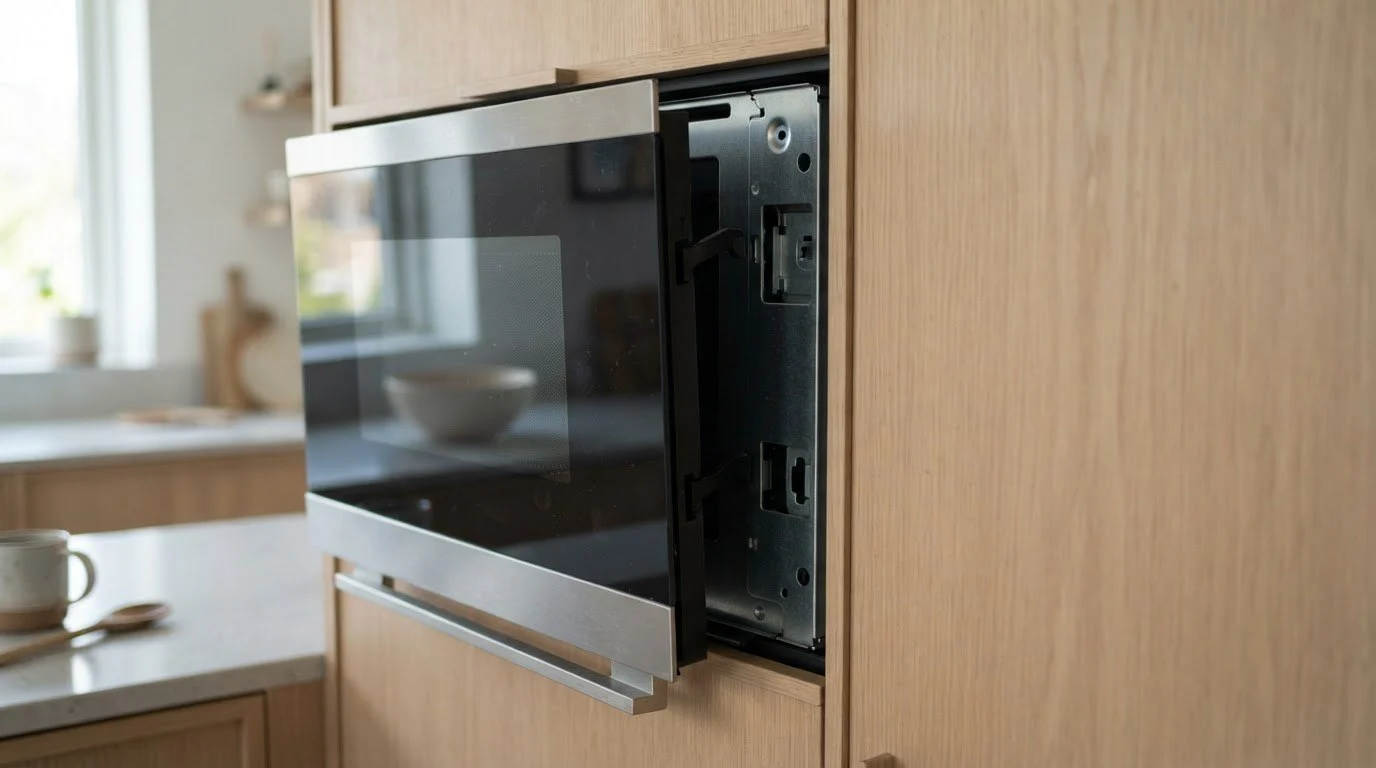
A microwave door carries hooks or latches that engage with slots in the cabinet. Behind those slots, switches called interlocks tell the control that the door is shut. The oven should not produce microwave energy unless those switches agree. Electrolux built-in models come in two door styles: a drop-down door, as on the EMBD3010AS, and a side-swing door, as on the EMBS2411AB and EMBS2411BB. The geometry differs, so the failure points differ too.
Each of these hints at a different cause, from a hook that is bent or chipped to a door that no longer sits square.
Splatter, dried food and cleaner residue collect on the door frame, the gasket surfaces and around the latch slots. A hard film can keep the hook from seating. This is the easiest cause to check.
Plastic latches are used all day. Slamming the door, hanging a towel on the handle or pushing on a drop-down door as a shelf all strain them. A hook that is chipped or loose may still hold sometimes, which gives you the intermittent symptom.
A side-swing door can droop on its hinges after years of use. A drop-down door can lose its alignment if weight has been put on it. Either one moves the hooks away from the slots they need.
Even if the door closes properly, an interlock switch that has worn can fail to register it. The symptom is a door that looks fine but a control that behaves as if it is open. Switches in this system are matched, and they are not an owner-replaceable item.
Built-in microwaves sit in trim kits in cabinetry. If the trim has shifted or the cabinet opening was altered, the oven may sit slightly out of square. That can push the door into a bind. Tell us if the unit was recently reinstalled or the cabinet was changed.
A drop-down door catches spills more often than a side-swing one, because plates and pans rest at the lower edge. Wipe the hinge area and the lower frame regularly, and keep the door from carrying weight. Both habits cut down on the wear that leads to a loose latch.
Book when cleaning does not help, when the door sits crooked, when the hooks look damaged, or when the oven starts and stops on its own. A visible gap at the door is a reason to stop using it altogether. Have your model number ready, usually found on the cabinet frame, behind the drawer front or inside the door edge, depending on the door style.
We diagnose before repair, give a written estimate, and fix nothing without your approval. Start with our Electrolux microwave repair page, and see the Electrolux microwaves lineup to match your door style.
No. A door that latches unreliably is a sign the safety interlocks are not dependable. Leave the oven unplugged or switched off until it has been looked at.
The latch parts and the switches behind them sit inside the door and cabinet, close to high-voltage components. That work is for a technician, not an owner repair.
Possibly. A switch that does not read closed gives exactly this symptom. A tripped circuit or a locked control panel can look similar, so check the power and the control lock first.
Yes. A drop-down door and a side-swing door use different hinges and hook layouts, so the failure points and the parts differ. The model number tells us which one applies.
It can. If the microwave sits slightly out of square in its trim, the door may bind against the frame. Tell us about any recent reinstall or cabinet work.
Share a few details and we’ll confirm an appointment. Prefer to talk? Call us and we’ll help right away.