Microwaves
Electrolux built-in microwaves open either as a drop-down drawer door or a side swing. Check the lineup, label spot and safe first…

Specialized Electrolux Appliance Repair in San Francisco
Mon–Sat: 8:00 AM – 7:00 PM
Built-in microwaves diagnosed with care for the cabinet and trim, and a written estimate before any repair.
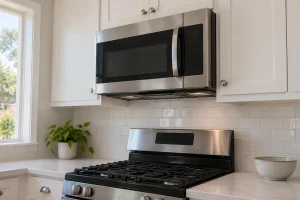
The microwaves we repair are the built-in kind, set into a wall or cabinet run beside the oven. Electrolux built-in models include a 30 inch drawer-style unit with a drop-down door and 30 inch units with a side-swing door. Because they sit in cabinetry rather than on a counter, getting to them, and the way they vent, differ from a countertop microwave.
The light, fan and turntable come on and the timer counts down, yet nothing warms. That pattern separates the control side, which is working, from the heating side, which is not. The problem may be in the high-voltage section that makes the microwave energy, in a protective switch, or in a part of the door system that tells the control the door is shut. Our guide on a microwave that runs but does not heat explains what a technician examines and in what order.
A drawer that drops open, a side-swing door that bounces back, or a unit that refuses to start because it thinks the door is open all point toward the latch and the switches it operates. A bent hinge or hardened gasket can also be the cause. Read why a microwave door will not latch for the sequence of checks.
A panel that flickers, shows garbled characters or ignores presses may be wet, worn or electrically stressed. Steam drifting from a cooktop below can reach the control, and a wet panel is a plausible reason for a message.
A buzz, a rattle from the fan or a smell of overheating deserves attention. A spark inside the cavity may be nothing more than a metal item or damaged interior coating, but it should not be ignored.
The built-in microwave codes are short and cover specific conditions:
Each of these tells us which system noticed a problem. It does not prove that a particular part needs replacing, so we test before we recommend a repair.
First comes your account: what the microwave did, when it started and whether a power cut or a spill came before it. Next we inspect the installation, looking at the trim, the vent path and how the door seals. We then run the unit on a normal task and see whether the fault reproduces. Testing follows, aimed at the switches, door hardware and electronics that match the behavior. A written estimate precedes any repair, and nothing is repaired without your approval.
Some internal parts of a microwave hold energy even when it is unplugged, so we do not ask owners to open the case and we handle those parts with the right procedures.
Do not remove the outer case, probe the inside or bypass the door switches.
Stop using the microwave if the door is bent, will not close tightly, has a damaged seal or shows cracks. Switch it off at the breaker if you smell burning, see sparks or notice smoke. A microwave whose door can be opened while it is running should not be used again until it has been examined.
The label is usually behind the drawer front or along the cavity edge, and a trim kit can hide it. It is listed EMBD3010AS as a built-in microwave with a drop-down door, and EMBS2411AB and EMBS2411BB as built-in side-swing models. The last letters of the number matter, so give us the whole thing.
You tell us the symptom, the code and the model. We look at the unit and its surroundings, test it and describe what we found. The estimate is written and the decision is yours. If a part must be ordered, we confirm the plan with you before we leave.
The Electrolux microwaves guide covers the lineup. If the microwave is part of a stacked unit with an oven, read about Electrolux wall oven repair, since both share the same cabinet.
The control side is working while something in the heating system is not. It could be the door system that signals the unit, a protective switch or the heating section itself, so it needs testing.
Codes E1 and E4 mean the unit protected itself from heat. Check that the vents are clear, let it cool and try again. If it returns, request a visit.
No. Parts inside can hold energy even when the unit is unplugged. Keep to outside checks such as cleaning the seal and clearing the vents.
E11 means moisture in the control panel. Let the panel dry, keep steam away from it and try again. If the message stays, book a visit.
They use different latch and hinge systems, so the parts and testing differ. We identify which style you have from the model number first.
Electrolux built-in microwaves open either as a drop-down drawer door or a side swing. Check the lineup, label spot and safe first…
Electrolux induction and gas cooktop repair in San Francisco and the Bay Area, from rejected pans and dead zones to igniters and…
Electrolux dishwashers that leave dishes dirty, hold water or show a code, diagnosed under tight Bay Area cabinets with a written estimate…
Electric and gas Electrolux dryers with no heat, long cycles, odd noises or early stops, checked from the vent to the drum…
Soft food, heavy frost, a pooling drain or a loud fan: Electrolux freezers diagnosed and repaired across San Francisco and the Bay…
No ice, thin cubes, a jammed chute or water on the floor: Electrolux ice makers traced from supply to mold across San…
Stacked Electrolux washer-dryer towers, electric or gas, repaired in closets and hallways around San Francisco and the Bay Area, one half at…
Diagnosis for Electrolux dual-fuel and induction ranges in San Francisco and the Bay Area, from burners and zones to oven heat and…
Warm compartments, leaks, noises, dispenser trouble or a flashing code: diagnosis and repair of Electrolux refrigerators across San Francisco and the Bay…
Repair for Electrolux single and microwave-combination wall ovens in San Francisco and the Bay Area, covering heat, fans, door latches and displays.
Front-load and top-load Electrolux washers that will not fill, drain, spin or unlock, diagnosed in San Francisco and the Bay Area with…
Temperature swings, a cooler that stays warm, fogged glass or noisy fans: Electrolux wine and beverage coolers serviced across San Francisco and…
Share a few details and we’ll confirm an appointment. Prefer to talk? Call us and we’ll help right away.