

Specialized Electrolux Appliance Repair in San Francisco
Mon–Sat: 8:00 AM – 7:00 PM
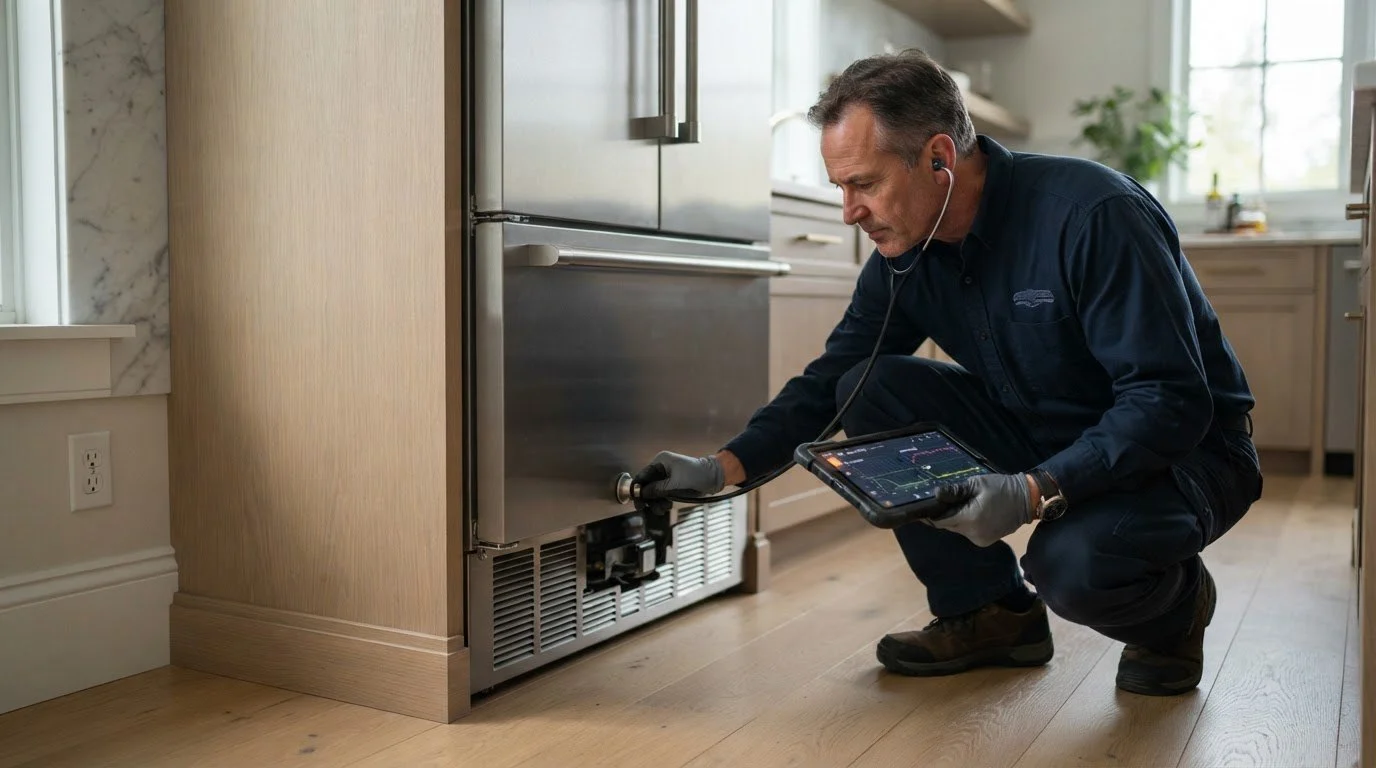
Clicks, buzzes and rattles from an Electrolux refrigerator come from a handful of parts. This article sorts harmless sounds from the ones that mean a fan, ice maker or compressor needs attention.
A refrigerator is never silent. Fans spin, refrigerant moves, a defrost heater cycles, plastic cools and contracts. The noises that deserve attention are the ones that are new, louder than before, or tied to a change in cooling. Before you pick up a screwdriver, which you should not, listen carefully and write down what you hear.
Stand a few feet from the cabinet and answer four questions. Is it a single click or a repeating one? Does it come from the top, the bottom rear, or inside the freezer? Does it stop when you open a door? And does it happen at a steady rhythm or only now and then? Those answers do most of the sorting.
Regular clicking every short while, often paired with warm food, can mean a start component is trying to bring the compressor on and failing. The relay clicks, the compressor does not stay running, and the cycle repeats. This is a job for a technician, and the unit should not be left clicking for long.
A fan motor with ice on its blades, or a bearing that is wearing out, makes a buzz, rattle or scrape. Inside the freezer, a chirping or scraping that fades after the freezer door has been closed for a while often means frost is touching the fan. Frost that returns is a sign the defrost system is not doing its job. The code Electrolux refrigerator SY EF reports an evaporator fan failure, so a code plus a fan noise together is a clear story.
A buzz when someone presses the water or ice lever points to the water inlet valve, which sits near the bottom rear and hums when it opens. A buzz with no water at all can mean the valve is energizing against a closed supply line or a clogged filter. When ice is jammed in the chute, the dispenser may sound an audible tone, matching Electrolux refrigerator DI SP, which indicates an ice jam in the dispenser chute.
Vibration against a wall, a loose drain pan, a tube touching the cabinet, or an unlevel cabinet rocking on its feet can all produce a rattle. Pull the unit forward only if it can move freely, and check that nothing is leaning against the back.
If the cabinet is built into cabinetry, as many Bay Area kitchen remodels are, remember that a trim panel or filler strip can transmit vibration and make a harmless noise seem worse.
A new rattle that disappears once the unit is level, or a one-off pop, can wait. A repeating click with warm temperatures, a grinding or scraping tied to a stalled fan, a buzz from a valve with no water, or a smell of hot electrical insulation cannot. If you smell burning, switch the refrigerator off at the breaker and request a visit.
When you book, we diagnose first. You receive a written estimate after the cause is identified, and nothing gets repaired until you give your approval.
The layout of the fans, valves and start components differs between a French-door cabinet and a drawer or built-in column, so the label matters. It is usually inside the fresh-food compartment on a side wall or near the door frame. For a cabinet like the Electrolux ERMC2295AS, give us the full model and serial. Our Electrolux refrigerator repair page explains how a visit runs, the Electrolux refrigerators guide covers the lineup, and if the whole unit seems to run without rest, read Electrolux refrigerator runs constantly.
A single click as the compressor or a fan starts is normal. A click that repeats in a loop, with the compressor not staying on, suggests a start component problem and should be diagnosed.
A short buzz from the water valve at the lower rear is normal while it fills. A long buzz with little or no water points to a clogged filter, a closed supply valve, or a failing valve.
Yes. Ice that builds up near the evaporator fan can scrape the blades. Frost that keeps returning means the defrost system needs checking, which is a technician task.
Only if it slides freely and the cord and water line have slack. Never force a built-in unit out of its cabinetry, and never open rear panels.
Note any code in the display and try one controlled power reset. If the sound or code returns, request a diagnosis rather than repeating the reset.
Share a few details and we’ll confirm an appointment. Prefer to talk? Call us and we’ll help right away.