

Specialized Electrolux Appliance Repair in San Francisco
Mon–Sat: 8:00 AM – 7:00 PM
A new water filter should improve taste, but sometimes the first glasses are cloudy or odd. Learn what is normal after a filter change and when the dispenser line or valve is the problem.
You swapped the filter to get better water, so a strange taste in the first glass is annoying. The good news is that the likely reasons are limited, and most can be checked without tools. The less good news is that a persistent taste points to something beyond the filter, and that part sits behind the cabinet.
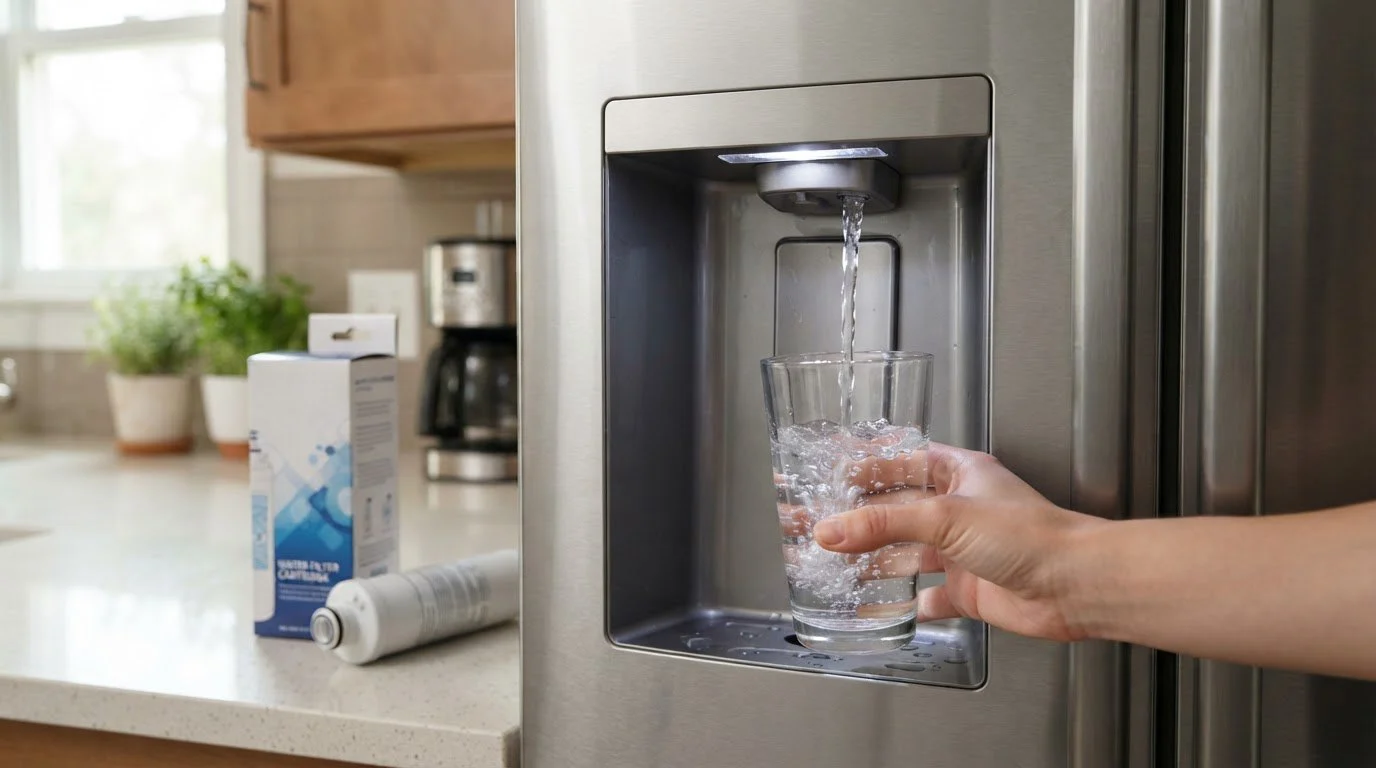
A filter cartridge arrives packed dry. Once it is locked in place, the first water through it pushes air out and flushes loose carbon dust. Until that settles, the water can look cloudy and taste a little flat or sharp. That is a normal break-in, and the usual advice is to run the dispenser for a good while and discard the first batch of water and ice.
The cause can also be something that was never the filter. The tank, valve and tubing hold water, and if the refrigerator went unused for a while, such as during a vacation or while a rental unit sat empty between tenants, that water goes stale. Ice made in that period carries the same taste.
If a thorough flush and a clean bin leave the taste unchanged, the issue lies in the supply line, the inlet valve, the reservoir or the dispenser tube. A kinked or aging line, a valve that does not shut cleanly, or a reservoir that holds water too long can all carry a flavor. Slow flow, spitting, or a dripping dispenser add to the case. Those components sit at the rear and bottom of the cabinet, and testing them involves water and live power, so they belong to a technician.
If the dispenser also feels slow, an ice problem might be at work. A jam in the chute produces an audible tone and the code Electrolux refrigerator DI SP, which indicates an ice jam in the dispenser chute. Water that tastes of the freezer is often tied to ice that melted and refroze in the bin.
Water that sits is water that goes stale, so the taste often improves simply by using the dispenser regularly. If the refrigerator will be idle for a while, for example in a vacation rental between guests, empty the ice bin before you leave and run the dispenser briefly when you return. Keep strong-smelling food covered, because ice absorbs odors from open containers. Note the date you change the filter so the replacement schedule does not slip, and keep the old cartridge until you know the new one performs well, in case you need to compare the type printed on it.
Book if the taste persists after flushing and cleaning, if the water slows or leaks around the filter housing, if the dispenser leaks or drips, or if the ice maker produces small or hollow ice along with the bad taste. The technician diagnoses the water path first, and you get a written estimate before any part is replaced. Nothing is repaired without your approval.
Models with a water dispenser or ice maker in the door or freezer are covered, such as the French-door Electrolux ERFC2393A family. The last letters on the label vary by finish and version, so the label near the filter bay or inside the fresh-food compartment is worth photographing. For wider information, see Electrolux refrigerator repair, the Electrolux refrigerators overview, and our Electrolux ice maker repair page if the ice is the main complaint.
Run the dispenser into a pitcher until the water looks clear and the sputtering stops, then discard the first batch of water and the first batches of ice. The user guide for your model gives the exact flushing steps.
Trapped air in the cartridge and lines makes water look cloudy. It usually clears within a short time of dispensing.
Yes. Old ice absorbs odors from food and from stale water. Emptying, washing and refilling the bin often fixes the taste.
Not necessarily. A poorly seated cartridge, stale lines, or the building supply can all be responsible. If flushing does not help, have the water path checked.
No. Cleaning chemicals do not belong in the refrigerator’s lines. If you suspect contamination in the lines, request a diagnosis.
Share a few details and we’ll confirm an appointment. Prefer to talk? Call us and we’ll help right away.