

Specialized Electrolux Appliance Repair in San Francisco
Mon–Sat: 8:00 AM – 7:00 PM
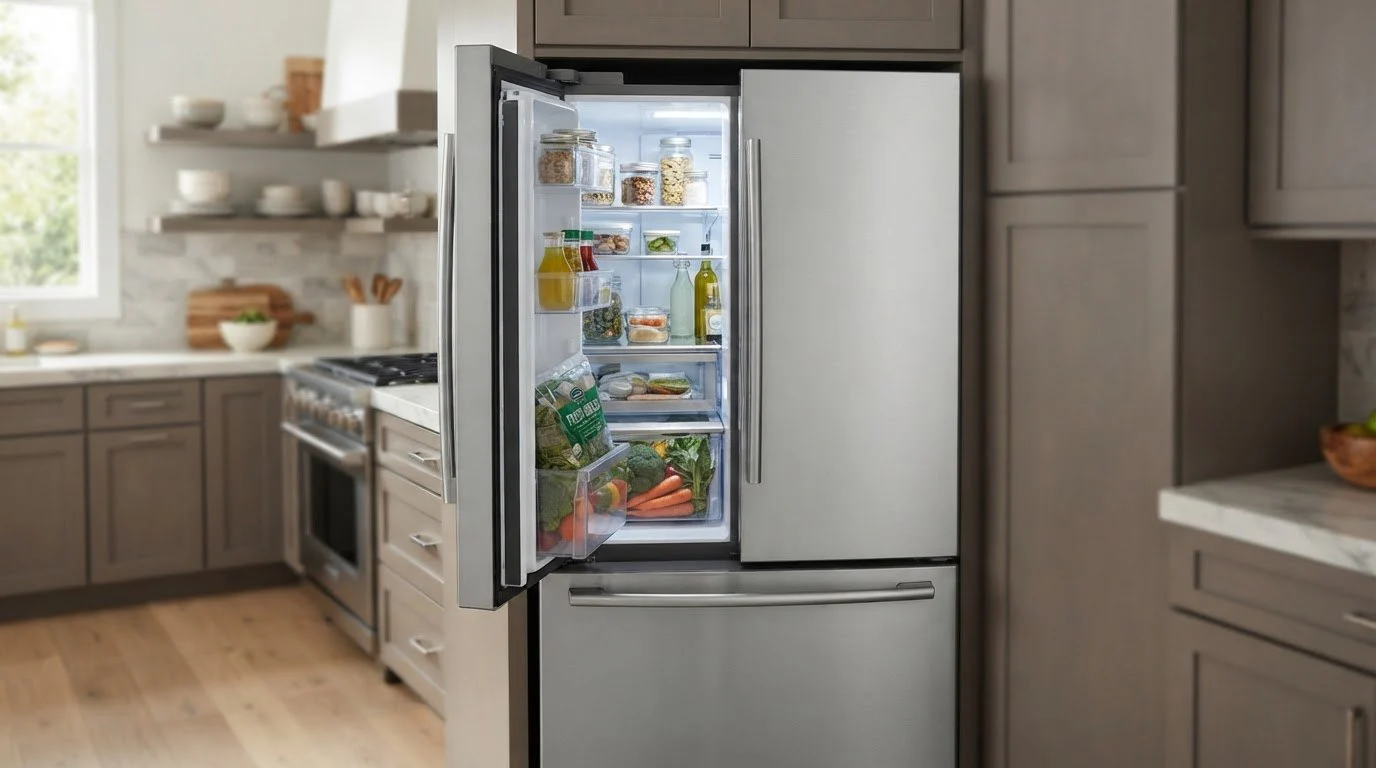
When an Electrolux refrigerator door swings back open, sticks ajar, or will not seal, the cause is often leveling, a gasket or an overloaded bin. Here is how to sort it out.
People describe this problem in different ways. The door bounces back after you push it. It closes but drifts open a finger-width a minute later. One side shuts and the other does not. Or it shuts, yet the alarm keeps chiming. Each version points to a different place, so start by deciding which one you actually have.
A refrigerator door closes because three things cooperate: the cabinet sits level so gravity helps the door settle, the gasket compresses evenly against the frame, and nothing inside blocks the door’s swing. On French-door models, the two upper doors also meet in the middle with a turning seal, and the lower freezer drawer rides on slides. If any one part is off, the whole closing action gets unreliable.
If the front feet or rollers were adjusted for a kitchen floor that has since moved, or the unit was pushed back crooked, the doors lean open. San Francisco flats and older row houses often have floors that slope slightly, which makes this common. A door that always swings toward one side is a clue.
A tall bottle, a full door bin, or a shelf pushed into the wrong slot stops the door a hair before it seals. In French-door models, an overloaded bin can catch the bin on the opposite door. The drawer below the doors can also jam when a basket is stacked past its rim.
Sticky spills turn a gasket into glue. It grabs, then releases suddenly, or lifts at a corner. A gasket that is folded under, torn, or flattened in one spot will not seat, and the door looks like it is closed when it is not. Wiping the gasket and its channel with warm soapy water on a cloth is a harmless fix.
A hinge that has loosened, a door that sags, or a worn cam can change how the door travels. This usually shows as a gap along the top or bottom edge, and as a door that scrapes the cabinet. Tightening structural hardware is where owners get hurt, because heavy doors with full bins can drop.
If the freezer drawer fights you, look for ice crystals on the slides or a build-up along the front edge. Frost there often comes from the drawer not sealing in the first place, a loop covered in our article on Electrolux freezer drawer frost at the front edge.
If the door seems fine but food is warming, check the display. Electrolux refrigerator H indicates a high temperature alarm after the cabinet stayed too warm for over an hour, which is a common result of a door that did not seal overnight. If the unit shows Electrolux refrigerator Sb, Sabbath mode is active, and some behaviors, such as lights and alarms, change by design.
Request a visit if the door still sags or will not seal after you have cleared the bins and cleaned the gaskets, if the gasket is torn, if the hinge looks bent or a screw has backed out, or if food has warmed. A technician confirms whether the fault is leveling, a gasket, a hinge, or a door that has dropped, and tells you what repair makes sense. You get a written estimate after the diagnosis, and no work starts until you say yes.
Door height matters most on tall, heavy French-door cabinets such as the Electrolux E23BC79SPS, which is no longer sold new. Look for the label inside the cabinet near the door frame so you can quote it. Read about the full range of work on the Electrolux refrigerator repair page and see the different cabinet styles in the Electrolux refrigerators guide.
Usually the cabinet leans forward, a bin or bottle pushes on the door, or the gasket is sticky and releases suddenly. Leveling the feet and clearing the bins fixes many cases.
Yes. Spills make gaskets grip and tear, and a folded or flattened section will not seal. Wiping with warm soapy water is a safe first step.
Not recommended. The doors are heavy, often hold full bins, and may carry wiring. Leave hinge work to a technician.
Food can warm and frost can form, and the compressor will run longer. If the high temperature alarm appears, have the unit looked at.
It can be related. Check for an overfilled basket or ice on the slides first. Persistent icing at the front edge suggests the drawer is not sealing.
Share a few details and we’ll confirm an appointment. Prefer to talk? Call us and we’ll help right away.