

Specialized Electrolux Appliance Repair in San Francisco
Mon–Sat: 8:00 AM – 7:00 PM
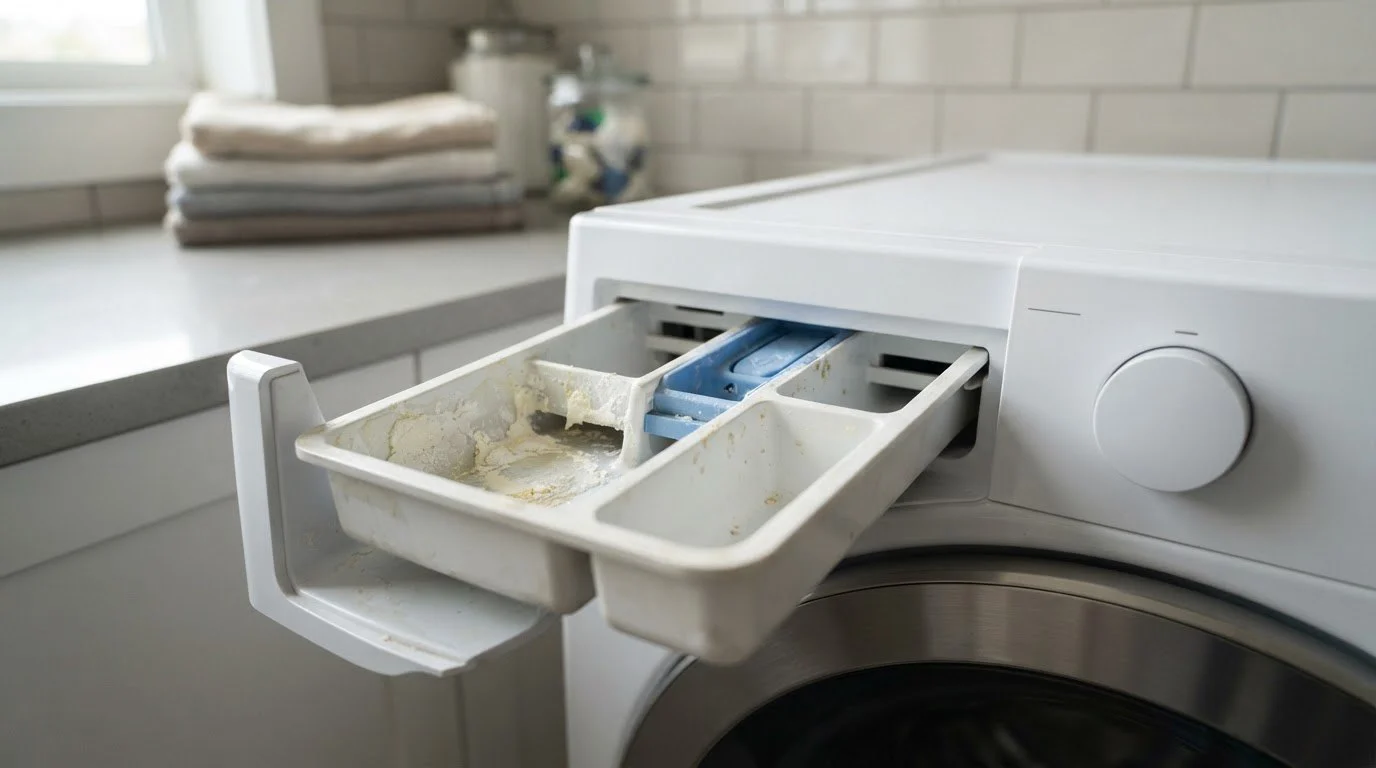
Wet, caked or undissolved detergent in the dispenser drawer points to water flow, the wrong soap or a clogged channel. Here is how to clear it and what to check if the problem keeps coming back.
The dispenser on a front-load Electrolux washer works by sending a controlled stream of fresh water through the compartments, so the soap is flushed into the drum. If you open the drawer after a cycle and find a puddle of thick detergent, a crust of powder, or a gel sitting in the corner, the stream did not do its job or it was blocked from reaching the soap.
The kind of residue tells you a lot. A hard, white crust along the back wall usually means powder detergent has hardened. A sticky, slimy film means liquid detergent has thickened and blocked the flow. A tray full of standing water suggests the drain channel under the insert is clogged. And a completely clean drawer with spotty clothes means the detergent went in but the water pressure was low.
High-efficiency washers use little water, so the extra soap that older machines could handle turns to paste. Standard detergent also creates foam that sticks. Using more than the label recommends clogs the siphon and leaves residue. The washer may even warn you with Electrolux washer EF2, meaning too much soap or wrong type.
Mineral build-up and old soap close the narrow ports at the back of the drawer. The water trickles instead of sprays. Pull the drawer, rinse it in the sink, and use a soft brush on the ports. Look into the empty cavity as well, since residue gathers there.
If the supply valve is only partly open, a hose is kinked, or the inlet screens are partly blocked by sediment, the washer fills slowly. The dispenser relies on pressure to flush. The code Electrolux washer E11 means fill time too long, and reflects exactly that sort of restriction. In older San Francisco buildings, sediment in the supply is common after plumbing work.
Putting detergent in the softener slot, filling past the max line, or pouring pods into the drawer rather than the drum are frequent mistakes. Pods belong in the drum under the clothes, unless your user guide says otherwise.
If the drawer is clean, water flows well at the hoses, and the dispenser still fails, an inlet valve may not be opening the correct path. That calls for a check with the cabinet open, which only a technician should do.
Many San Francisco apartments tuck the washer into a closet with a dryer on top or beside it. In that setup the hoses are often squeezed behind the machine and can kink without anyone noticing. If you can slide the washer out safely, check both hoses for bends and make sure the rubber washers inside the hose ends are intact. If the washer is part of a laundry tower, do not pull it forward at all. A weak stream at the drawer is a strong hint that the supply is restricted, and that is worth fixing before you blame the dispenser.
Run one normal cycle after cleaning, then open the drawer again. If it is clean, the residue came from soap build-up. If a little detergent remains in the same compartment each time, the flush is too weak for that channel. If the clothes also feel gritty or smell musty, the soap is not reaching the drum, and a diagnosis of the inlet is worthwhile. Keep a note of the detergent brand and the amount you use, since changing either is often enough to cure the symptom. Liquid detergents thicken in cool rooms, so a laundry closet that runs cold can make the problem seasonal.
Book when a cleaned drawer still leaves soap behind, when fill is slow with both valves open, when water leaks from the drawer front, or when the washer shows a fill or suds code repeatedly. The visit starts with diagnosis, a written estimate follows, and no repair happens until you agree.
It helps to know the full model, usually printed on the door frame or inside the door opening. A washer like the Electrolux ELFW7337AW, a 300 Series front-load model, sets its own dispenser layout, and the model number lets us look at the right one. For more, visit Electrolux washer repair and the Electrolux washers overview.
Thick soap, a clogged channel or low water pressure keeps the dispenser from flushing. Clean the drawer and check the supply valves first.
Use a high-efficiency detergent in the recommended amount. Standard detergent creates excess foam and leaves residue.
Pods generally go in the drum under the clothes rather than in the drawer. Check your user guide for your model.
Open it fully and press the release tab described in your user guide. Do not force it.
If a cleaned drawer still collects detergent, or fill is slow with the water open, request a diagnosis for the inlet valve or flow.
Share a few details and we’ll confirm an appointment. Prefer to talk? Call us and we’ll help right away.