Ice Makers: Types, Symptoms and First Checks
How Electrolux ice makers work in refrigerators and built-in units, the symptoms owners report, and what to check at the water line,…

Specialized Electrolux Appliance Repair in San Francisco
Mon–Sat: 8:00 AM – 7:00 PM
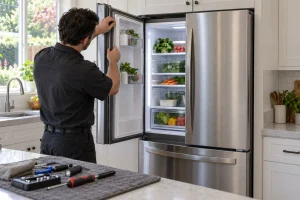
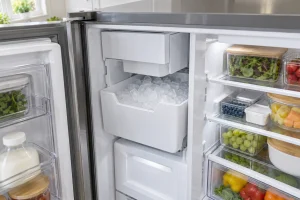
From the water valve to the ice mold and chute, the whole ice path is checked before a part is replaced.
Ice is one of those things you only notice when it is gone. The bin is half empty, the cubes come out as thin shells, the dispenser grinds but nothing drops, or a puddle spreads beneath the refrigerator after a night of production. In San Francisco, where many kitchens are small and a refrigerator with a built-in ice maker is expected to do everything, those failures are quickly noticed. We diagnose Electrolux ice makers as a system: water supply, cold, mechanism and controls, in that order, before suggesting a repair.
An ice maker needs three things in place: water arriving at the mold, a freezer cold enough to freeze it, and a mechanism that cycles. If any one is missing, no ice appears. That is why a technician checks the freezer temperature, the supply valve and the inlet valve before looking at the ice maker assembly itself. A shut-off valve that was closed during plumbing work and never reopened is a surprisingly common reason in older buildings.
Cubes shaped by low water flow tend to be thin, fused together or hollow. The cause may be a filter overdue for replacement, a bent water line behind the refrigerator, or a valve that opens only partway. Our article on water taste after a filter change shows how a filter that is not fully seated affects both water and ice.
Ice stored for a long time in the bin can melt slightly and refreeze into a mass that jams the auger or the chute. Door openings that let in warm moist air, a bin left with old ice, or a freezer that cycles through warm spells encourage it. Emptying the bin and breaking up clumps by hand, with the unit unplugged or the ice maker switched off, is safe; prying with tools is not.
If the chute jams, many Electrolux refrigerators sound a tone and show DI SP, which refers to an ice jam in the dispenser chute. If the dispenser makes no sound at all, the problem may lie in the door switch, the control, the chute flap or the wiring through the hinge. A technician separates a mechanical jam from an electrical fault by listening and testing the parts that can be tested without risk.
Leaks may come from the supply line, the connection at the back, the inlet valve, the filter housing or an overfilled ice mold. Because water travels, the visible puddle is rarely at the source. We trace it from the wet spot back to its start, and we close the supply valve first if there is any doubt.
An ice maker depends on a clean, steady water line. In San Francisco flats where the refrigerator sits in a narrow galley kitchen, the line behind it often gets pinched when the unit is pushed back into place. In older homes, the supply tubing may be a type that kinks easily or a saddle valve that clogs with sediment. A water line routed across a floor where it can be stepped on, or an extension that has been added without proper fittings, creates leaks and weak flow.
Built-in and column refrigerators place the ice maker inside cabinetry that limits access to the valve and the line. We confirm how the unit is installed before the visit so we can plan around the cabinetry. Stand-alone ice makers also need a drain path, and a drain that is blocked or that runs uphill leaves water in the cabinet.
The freezer matters as well. When the freezer door does not seal or the defrost system is in trouble, the ice mold may never get cold enough to complete a cycle. Our Electrolux freezer repair page covers that side, and Electrolux refrigerator repair covers the surrounding cooling system.
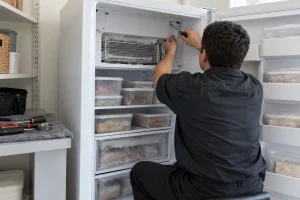
We start with what you noticed and when. Did the ice stop after a power cut, a plumbing job, a filter change or a move? Then we watch the water path: valve, line, filter and inlet. Next we confirm the freezer is cold enough to freeze a batch. Only after that do we examine the ice mold, the ejector, the bin sensor and the controls. A technician who replaces the ice maker assembly without checking water and cold will often be back for the same complaint a month later.
You then get a written estimate. Nothing is repaired without your approval.
Please do not pry at the ice mold, use a hair dryer on internal parts, or disconnect the water line while the supply is on. Those steps cause leaks and damage.
Close the supply valve right away if water is running onto the floor, and switch off the breaker if water has reached an outlet, cord or electrical part. If you notice a burning smell, power off the refrigerator at the breaker.
Ice makers are built into different refrigerators and freezers, and the parts differ by model. The label is usually on the inside wall of the compartment or along the door frame. Photograph it and keep it with the symptom you noticed. Models where ice complaints reach us include the E23BC79SPS ICON Designer French-door refrigerator, which is no longer sold new, and the 36-inch ERFG2393AS French-door refrigerator. More on the range appears on Electrolux ice makers.
Low water flow is the usual reason. A partly closed supply valve, a kinked line, a filter that is clogged or not fully seated, or an inlet valve that is not opening all the way can all starve the mold. Checking the valve and filter from the outside is a fair first step before you book.
Ice absorbs odors from food in the freezer, so open containers and old ice are common causes. A stale bin that has not been emptied for a long time is another. If fresh ice from a clean bin still tastes wrong after a filter change, mention it when you book.
Yes. Ice production depends on the freezer holding its temperature. If the freezer has drifted warm, fixing the cooling problem often brings the ice maker back, which is why we check the freezer side first.
Yes. Chutes, flaps, crushers and door-mounted controls are part of the ice system, and they jam, stick or lose their signal in ways a technician can trace. A code such as the one on our DI SP page shows what a chute jam looks like.
Shut the water supply valve to the refrigerator to stop the flow, mop up the water and keep a towel under the area. Then book a visit so the technician can find whether the leak comes from the line, the inlet valve, the filter housing or the ice mold.
How Electrolux ice makers work in refrigerators and built-in units, the symptoms owners report, and what to check at the water line,…
Electrolux induction and gas cooktop repair in San Francisco and the Bay Area, from rejected pans and dead zones to igniters and…
Electrolux dishwashers that leave dishes dirty, hold water or show a code, diagnosed under tight Bay Area cabinets with a written estimate…
Electric and gas Electrolux dryers with no heat, long cycles, odd noises or early stops, checked from the vent to the drum…
Soft food, heavy frost, a pooling drain or a loud fan: Electrolux freezers diagnosed and repaired across San Francisco and the Bay…
Stacked Electrolux washer-dryer towers, electric or gas, repaired in closets and hallways around San Francisco and the Bay Area, one half at…
Repair for Electrolux built-in drawer and side-swing microwaves in San Francisco and the Bay Area, covering no heat, door latches and display…
Diagnosis for Electrolux dual-fuel and induction ranges in San Francisco and the Bay Area, from burners and zones to oven heat and…
Warm compartments, leaks, noises, dispenser trouble or a flashing code: diagnosis and repair of Electrolux refrigerators across San Francisco and the Bay…
Repair for Electrolux single and microwave-combination wall ovens in San Francisco and the Bay Area, covering heat, fans, door latches and displays.
Front-load and top-load Electrolux washers that will not fill, drain, spin or unlock, diagnosed in San Francisco and the Bay Area with…
Temperature swings, a cooler that stays warm, fogged glass or noisy fans: Electrolux wine and beverage coolers serviced across San Francisco and…
Share a few details and we’ll confirm an appointment. Prefer to talk? Call us and we’ll help right away.