

Specialized Electrolux Appliance Repair in San Francisco
Mon–Sat: 8:00 AM – 7:00 PM
Cloudy, filmy glasses can be hard water, too much detergent, too little rinse aid or permanent etching. Learn how to tell them apart with a simple vinegar test and a few checks.
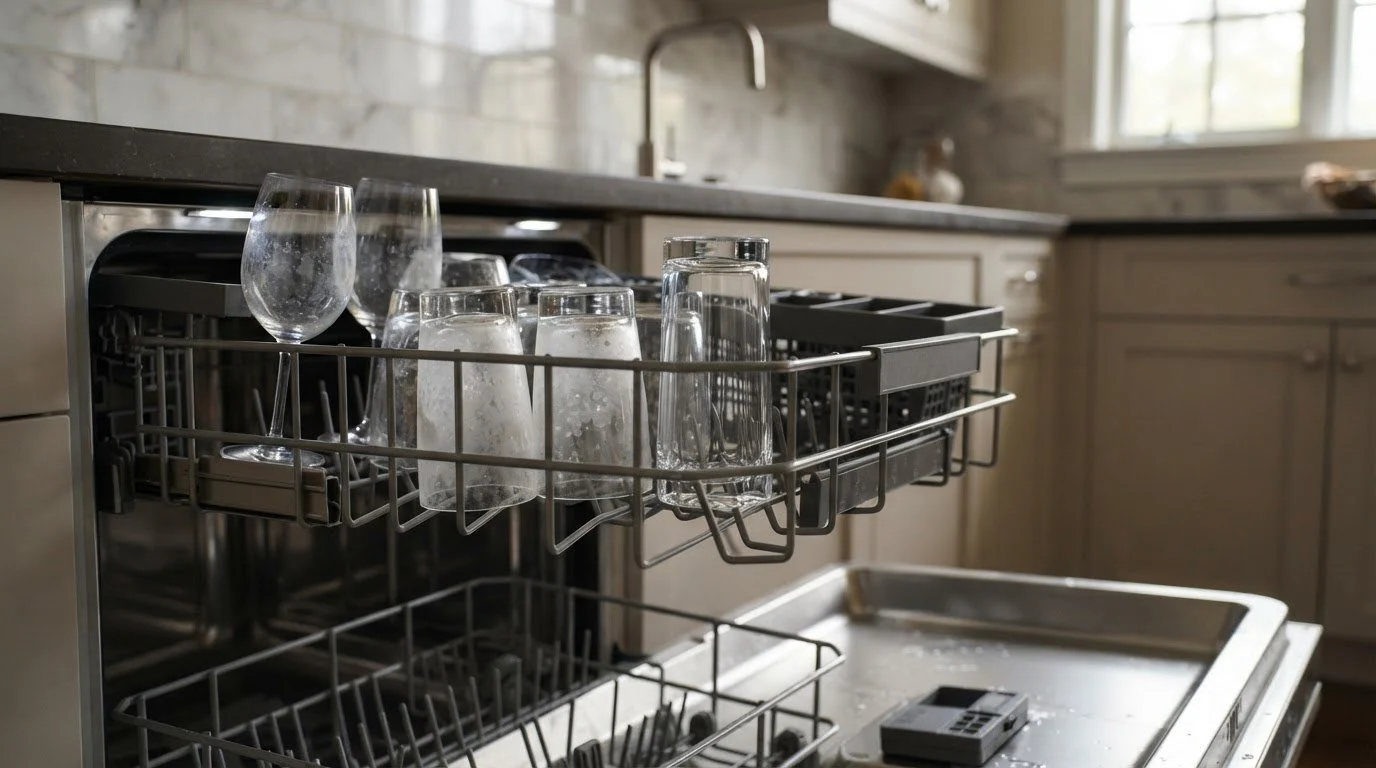
You pull out a glass that should sparkle and it looks foggy, as if it were breathed on. Sometimes the haze appears in streaks; sometimes it covers the whole surface. It looks like a dirty dishwasher, but the cause is often a mix of water chemistry, detergent habits and cycle conditions. A few quick tests tell you whether the haze can be removed or is permanent.
Soak a cloudy glass in plain white vinegar for a short time, then rinse and dry. If the haze disappears, it was mineral film left from hard water or residue from detergent. If it stays, the glass surface has been etched, which is slight permanent damage and cannot be wiped away. Etching often shows a rainbow shimmer when the glass is held to the light. Glasses that are etched usually indicate that too much detergent, or very soft water with a strong detergent, was acting on them over many cycles.
Knowing the difference matters because film can be fixed by changes in the way you run the Electrolux dishwasher, while etching is only prevented from getting worse.
Water that is rich in minerals leaves residue as droplets dry on the glass. If the film comes back after each cycle, rinse aid helps water sheet off the glass instead of beading, and it is worth checking that the rinse aid reservoir is filled and releasing. Heated drying also bakes minerals onto the surface, so letting glasses air-dry with the door cracked after the cycle can lessen the haze.
More detergent does not wash better. In a soft-water household, a full dose can leave a film or etch glass. Likewise, adding a pod and extra powder doubles the problem. Use the amount the package recommends for your water, and clean any caked powder from the dispenser lid. If your pods leave residue, check whether the dispenser lid is actually opening during the wash.
Detergent needs the right wash temperature to dissolve and clean fats. If the incoming water is cool, or the dishwasher is not heating properly, residue stays on the glasses. The manual lists i60 as a heating problem where the water is not heating correctly or not reaching temperature. See the page on i60 heating problem for details. A long run of hot water from the kitchen tap before starting the dishwasher can help in homes where the water heater is far from the kitchen. Also remember Hd means heat delay, and is simply the unit warming the water before it washes.
A dirty filter or sump holds food soil that circulates and re-deposits on glasses. The manual lists i40 for a clogged filter or sump. Clean the filter, check the spray arms for blocked holes and make sure they turn freely. Reduced circulation, noted by codes like i50 for a wash motor or circulation system problem, also leaves glasses cloudy because the water does not reach the top rack well.
Glasses that touch each other or lean against the tub trap water and detergent between them. Stand glasses apart with the open end angled down, away from the center spray. Do not nest bowls above glasses so that dirty water drips on them. A crowded top rack can leave patches of film in the same spot every time.
If you want a deeper clean, a manufacturer-approved dishwasher cleaner designed for the appliance can be used as the package directs, or an empty cycle with white vinegar in a cup on the top rack can lift mineral film. Skip vinegar if your owner guide advises against it for your model.
Do not mix bleach and vinegar, and do not run bleach through the dishwasher unless the owner guide approves it. Do not use dish soap or handwashing liquid in the dispenser. Do not pour cleaner into the tub in amounts the package does not recommend. If your glasses are etched, there is no repair for the glass, so switch the detergent dose and rinse aid settings to prevent more damage. Keep fragile glassware out of intensive cycles.
If the cloudiness appears suddenly, glasses feel greasy as well, plates have gritty film, or the dishwasher shows a code such as i10 for a water supply problem, i20 for incomplete draining or i60 for a heating problem, the fault is in the machine and not the glassware. A weak supply or a drain that leaves water behind leaves residue on every load. Our technicians check inlet flow, heating, drainage and circulation in turn.
Rinse aid dispensers, heating elements and filters vary by line. The label sits on the door edge or inner door frame. The EDSH4944BS is a 24-inch current Electrolux model, and its number tells us which dispenser and filter assembly to expect.
Book if film returns despite correct detergent, rinse aid and a clean filter, or if a code appears. We diagnose before repairing, give a written estimate, and repair nothing without your approval. See Electrolux dishwasher repair for how a visit works.
Soak one in vinegar. If the haze remains and shows a rainbow shimmer in light, it is etching and permanent.
Yes, when the problem is mineral film. It helps water sheet off and dry cleaner. It cannot reverse etching.
Both matter. Water that is too cool leaves residue, and constant heated drying can bake minerals on. Running the hot tap first helps in many homes.
Circulation to the top rack depends on spray arm flow. Blocked arm holes or a clogged filter can leave that rack with film.
Give the model number, the detergent type and dose, whether rinse aid is in use, the vinegar test result and any code.
Share a few details and we’ll confirm an appointment. Prefer to talk? Call us and we’ll help right away.