

Specialized Electrolux Appliance Repair in San Francisco
Mon–Sat: 8:00 AM – 7:00 PM
A puddle sitting in the tub bottom or under the filter after the cycle is a drainage symptom. Here is how to read it, what to check at the sink, and when to book a visit.
You open the door after a finished cycle and find water pooled beneath the filter, in the sump at the bottom of the tub. Some dishwashers hold a thin film of water there by design, so the first question is whether what you see is a shallow film or a visible pool that sits above the filter basket and smells of old food. A film that is gone after a later cycle is usually nothing to chase. Water that is still there hours later, or that returns after every wash, tells you the drain path is not clearing the tub.
The sump is the low point where wash water gathers before the circulation pump sends it back to the spray arms and, at the end, before the drain system pushes it out. If the sump stays full, one of three things is happening. Something is blocking the way out, the part that moves the water out is not running or not opening, or the dishwasher never reached the drain stage because the cycle stopped early.
On Electrolux dishwashers the display may help you tell these apart. The code i20 means the dishwasher did not drain completely, and i40 points at a clogged filter or sump with built-up food soil. If you see neither, read the display before you do anything else and write down what it showed, including the exact letters and digits.
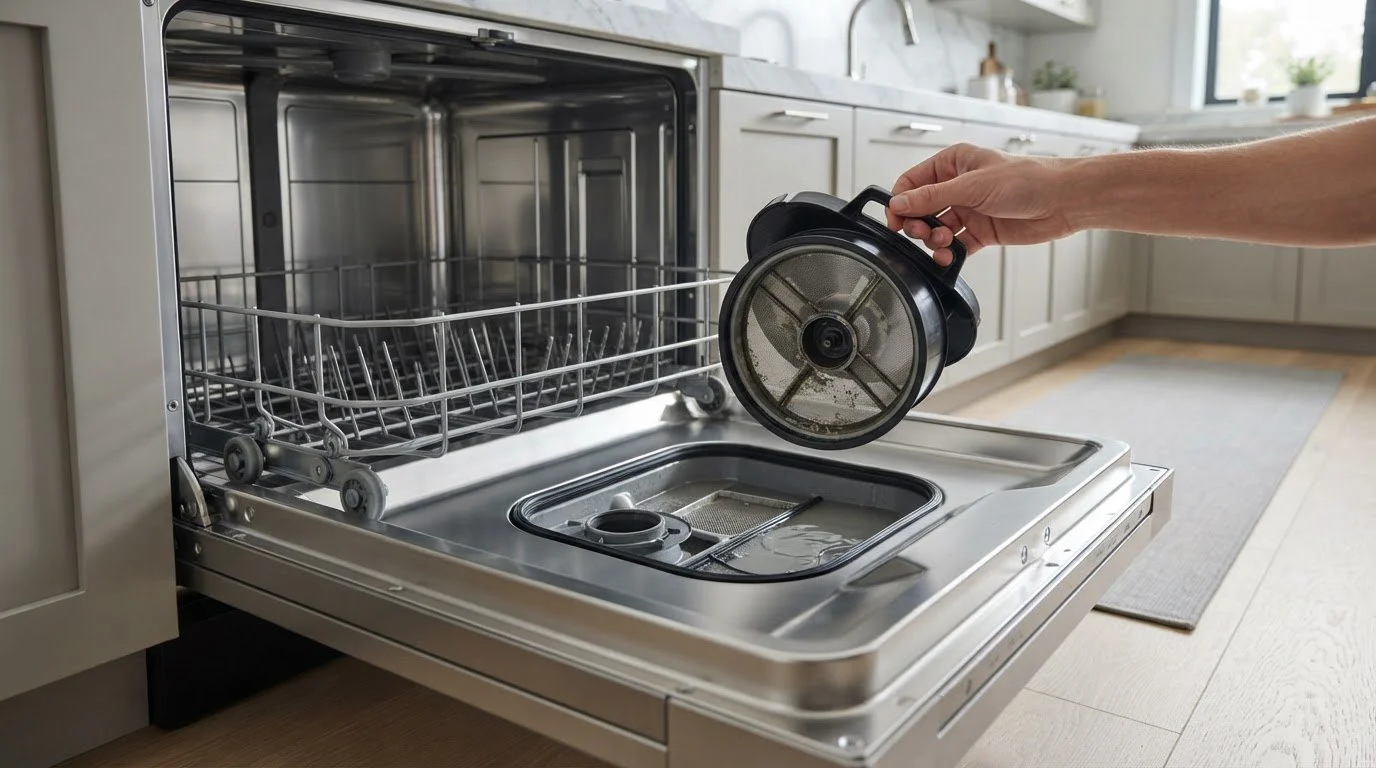
Food soil, label scraps, broken glass slivers, seeds and the grit that comes off unrinsed pans collect around and inside the filter. Water then drains slowly or not at all, and the leftover pool is cloudy. This is the one cause an owner can often confirm with eyes and hands.
The dishwasher drain hose travels to the sink drain or to a disposal inlet. Two things go wrong there. Disposers installed new may still have a knockout plug in the dishwasher inlet, and a kinked or crushed hose behind the cabinet slows the outflow. In San Francisco flats and condos with tight under-sink cabinets, a hose pinched by stored cleaning supplies is a surprisingly frequent culprit.
If the kitchen sink backs up while the dishwasher runs, the problem is in the household drain line, not the appliance. Standing water in the sink basin along with water in the tub points that way.
Electrolux dishwashers use a drain valve arrangement that the control board checks for position feedback. Codes such as Er07 and Er11 are about the drain valve, and a drain problem that returns every cycle despite a clean filter belongs to a technician. The same is true when the display is blank on the symptom yet the pool never leaves.
A door that was opened mid-cycle, a power interruption or a paused cycle can leave water in the tub simply because the machine never reached the drain step. The PF indicator means the dishwasher lost power during a cycle. Run a short cycle after power is steady and see whether the water goes.
If you are comfortable looking behind the toe plate or the sink cabinet without removing screws, you can glance at the visible length of the drain hose for a kink. Do not pull the unit out of its cabinet, and do not disconnect any hose.
Book when the filter is clean and seated, the sink drains normally, and water still collects beneath the filter after a full cycle. Also book if any of these appear: a drain code that returns after a clean filter, water on the floor in front of the dishwasher, a humming sound with nothing leaving the tub, or a display that shows a leak indication. The Er01 and i30 codes both involve water detected where it should not be, and a unit showing them should be left off until it has been looked at.
When you contact us, have the model number ready. It is usually on the inside of the door frame or on the tub edge. Models such as the EDSH4944BS and EDSR4932 share the same general kind of drain arrangement, but the exact part layout depends on the platform, which is why the number matters. We diagnose before any repair, give a written estimate, and do nothing without your approval. You can read more about this on our Electrolux dishwasher repair page, or browse the Electrolux dishwashers lineup to find your model.
A thin film in the sump is common and usually dries or drains in the next cycle. A visible pool above the filter basket, especially one that stays for hours, is not normal and deserves the checks above.
Rinse the filter pieces under running water and brush the mesh. Skip strong chemicals in the tub, since they can sit in the sump and affect rubber parts. Use only what your owner guide recommends for cleaning.
If it returns after each cycle, the drain path is still restricted or the drain mechanism is not completing its job. The filter, the hose and the sink line are the first suspects, and a technician checks the rest.
No. A code like i20 reports that the tub did not empty, which a clogged filter, a kinked hose or a slow sink can also cause. The part is confirmed only after the simpler causes are ruled out.
If water is reaching the floor or a leak code is showing, yes. If it is only a small pool and the sink is draining, you can try a cleaned filter and one short cycle before booking.
Share a few details and we’ll confirm an appointment. Prefer to talk? Call us and we’ll help right away.