Laundry Towers
A laundry tower puts a washer and a dryer in one stacked cabinet. Here is how the Electrolux tower lineup is organized…

Specialized Electrolux Appliance Repair in San Francisco
Mon–Sat: 8:00 AM – 7:00 PM
One frame, two appliances, and a closet around them: we find which half is failing and what the space is adding.
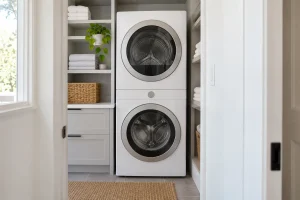
A laundry tower stacks a washer and a dryer in one frame, which saves floor space in a narrow hallway closet or a galley laundry nook and complicates repairs in the same stroke. The two halves share a cabinet, a footprint and often a power or gas arrangement, but they fail independently: the washer on the bottom can have a drain problem while the dryer on top works perfectly. Electrolux towers come in electric and gas versions, and the first thing we sort out is which half is acting up and whether the other half is affected.
Trouble in the lower unit looks like any front-load washer: slow or no fill, water left in the drum, a door that will not unlock, a hard thump in spin or a smell that sticks around. Because the tower sits on a single base, vibration from the washer travels up the frame and into the dryer, the cabinet and the closet walls. A tower that shakes the whole closet is unlike a freestanding washer with a loose pair beside it.
Clothes that stay damp, a dryer that runs without heat, a stop in mid-cycle and a hot cabinet are the classic complaints. When the top unit sits above the washer, its vent usually runs from the back of the tower to the wall, and a short, crushed or lint-filled transition makes everything worse. A gas tower adds a gas burner and igniter; an electric tower adds a heating element and the thermal safety parts.
If the top controls go quiet while the washer still works, the problem may be a power or control connection to that half rather than the dryer parts themselves. Our article on a dryer side that is not responding covers what to separate out before booking.
A tower with a heavy load on one side can walk, shake and bang against the closet walls. The causes include an unlevel floor, a worn suspension component, a load collected on one side or a base that has settled. A laundry tower that vibrates in a tight closet explains how the space itself can amplify the noise.
We ask which half misbehaves, when it began and whether both halves ever fail together. At the unit we run each half separately, look at level, vent path, drain and supply, read any code and then test the part that matches. Some of the work needs the tower pulled forward or tipped from its position, so we plan for the closet before we touch anything. You get a written estimate with the finding in plain terms. Nothing is repaired until you say yes.
A tower display may show codes that also appear on Electrolux washer or dryer lists, so write the code down exactly, along with which half was running. Look at the washer codes such as E21 or EF5 and the dryer codes such as EF1 as examples of how Electrolux describes drain, load balance and vent problems. The label decides which meaning applies. The error codes index lists the rest.
The closet is part of the machine. A tower that fits behind louvered doors needs air for the dryer and room to pull out for service. Check these points:
Do not remove the top or rear panels, do not touch the gas connection and do not try to jump a door switch.
Turn off the breaker for burning smells, sparks, scorched lint, a hot cabinet or water leaking down the front. If you smell gas, leave the home, avoid switches and call the gas utility or 911 from outside. A leaking washer half can drip into the tower base and the floor beneath it, which matters in a multi-unit building.
The label is usually on the washer door frame or the inside of the dryer door, and a tower may carry a single label for the pair. The range includes electric models such as the ELTE7600AT, the gas ELTG7300AW in the 300 Series, and the ELTE730C family, where the last letters on the label vary by finish or version. Fuel type changes which parts the dryer half uses.
Because of the stacked layout, even a simple fix can take planning. Reaching a rear drain pump may mean tilting the base or disconnecting the vent; reaching a dryer part may mean detaching the top unit from its mounting. We check the walls, the floor and the hoses before moving anything, and we put the tower back level, with the vent reconnected and the drain hose seated, then run both halves to confirm.
Describe which half is affected and the closet setup. We confirm the address within San Francisco or the Bay Area, schedule a window and arrive ready to work in a small space. Please clear the front of the tower and the closet floor.
The lineup is on Electrolux laundry towers. For the individual halves, see Electrolux washer repair and Electrolux dryer repair.
Yes. The washer and dryer run on their own controls and mechanics, though they share a frame and sometimes a power arrangement. We test each half separately.
Often, for the vent and rear connections. Keep the path clear and let us know if the closet is tight.
An unlevel floor, an uneven load or a worn suspension part can all transfer motion up the stack. Closet walls amplify the noise.
The washer half is similar. The dryer half differs in how it makes heat, so the fuel letter in the model number matters.
Which half has the problem, the model label, any code and a short description of what happens.
A laundry tower puts a washer and a dryer in one stacked cabinet. Here is how the Electrolux tower lineup is organized…
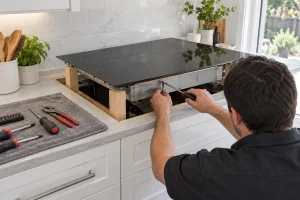
Electrolux induction and gas cooktop repair in San Francisco and the Bay Area, from rejected pans and dead zones to igniters and…
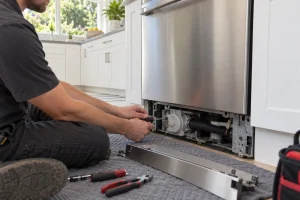
Electrolux dishwashers that leave dishes dirty, hold water or show a code, diagnosed under tight Bay Area cabinets with a written estimate…
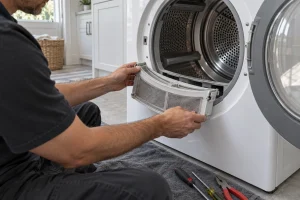
Electric and gas Electrolux dryers with no heat, long cycles, odd noises or early stops, checked from the vent to the drum…
Soft food, heavy frost, a pooling drain or a loud fan: Electrolux freezers diagnosed and repaired across San Francisco and the Bay…
No ice, thin cubes, a jammed chute or water on the floor: Electrolux ice makers traced from supply to mold across San…
Repair for Electrolux built-in drawer and side-swing microwaves in San Francisco and the Bay Area, covering no heat, door latches and display…
Diagnosis for Electrolux dual-fuel and induction ranges in San Francisco and the Bay Area, from burners and zones to oven heat and…
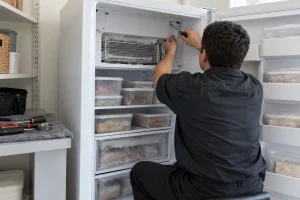
Warm compartments, leaks, noises, dispenser trouble or a flashing code: diagnosis and repair of Electrolux refrigerators across San Francisco and the Bay…
Repair for Electrolux single and microwave-combination wall ovens in San Francisco and the Bay Area, covering heat, fans, door latches and displays.
Front-load and top-load Electrolux washers that will not fill, drain, spin or unlock, diagnosed in San Francisco and the Bay Area with…
Temperature swings, a cooler that stays warm, fogged glass or noisy fans: Electrolux wine and beverage coolers serviced across San Francisco and…
Share a few details and we’ll confirm an appointment. Prefer to talk? Call us and we’ll help right away.