Cooktops
Electrolux cooktops include induction models in 30 and 36 inches and a 36-inch gas model. See the lineup, common complaints, codes and…

Specialized Electrolux Appliance Repair in San Francisco
Mon–Sat: 8:00 AM – 7:00 PM
Induction and gas cooktops tested under normal use, with each fault explained before you decide.
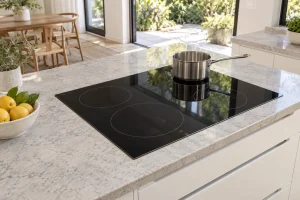
A cooktop looks simple: a glass or metal surface with a few controls. Behind it sit gas valves and igniters, or induction coils and power electronics, and a fault in either can take out one zone or the whole top. Electrolux cooktops include 30 inch and 36 inch induction models and a 36 inch gas model, so most San Francisco kitchens we visit fall into one of those two families.
Induction heat only works with cookware a magnet will cling to, centered on the zone. When a pan is rejected, the cookware is the first suspect, but a sensor or the electronics can also be at fault. Our post on a single zone that does not detect the pan describes how to tell them apart, and the one on a zone that heats weakly covers the related complaint.
Cleaning with a wet cloth over the control strip can leave moisture or residue that confuses the touch sensors, and we have a post specifically about touch controls after cleaning. If the problem remains after the surface is dry and clean, the panel or the control board needs testing.
Induction tops protect themselves. A zone that stops mid-cook, or a top that shuts down completely and shows a number, usually reports a temperature sensor, a communication link or a supply voltage issue. The codes below come from the Electrolux listings.
Write the code down with every digit before you do anything else. The left and right sides of an induction top report separately, which helps narrow the search:
A code names a circuit rather than a part. We use it as a starting point and then confirm with testing.
A gas burner that clicks without lighting, lights only after several tries, burns with a ragged flame or keeps clicking after it has lit points toward the cap, the igniter, moisture, or the gas path. Boil-overs often get into the igniter well. A burner that lights but then dies when you turn it down may involve flame sensing or airflow. We do not touch gas fittings outside a proper diagnosis, and we will tell you what we find before touching anything.
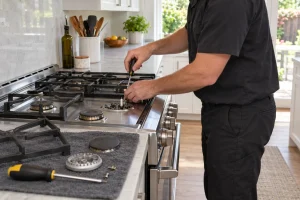
We start with your description and a look at the surface: cracks in the glass, pooled residue, burner parts out of place. Then we watch the cooktop run under normal use, because intermittent faults rarely show up on a cold, idle top. The next step is testing the suspect components. You receive a written estimate before any repair, and nothing is repaired without your approval.
Please do not lift the cooktop, remove panels or loosen gas connections yourself.
If you smell gas, leave the home without using switches and call the gas utility or 911 from outside. If you see a cracked glass surface, sparks, smoke or smell burning, switch off the breaker. Do not keep cooking on a top whose glass is broken, because liquids can reach the electronics underneath.
The label is usually under the cooktop, on the frame or in the owner papers. Induction models include ECCI3068AS and ECCI3668AS, while ECCG3668AS is a gas cooktop. Another listing, EW30GC60IS, is a 30 inch cooktop. Knowing which family you own tells us whether to bring igniters or induction parts in mind.
You give us the model number, the code and a short account of the symptom. We inspect, test and explain. The written estimate comes first, and you decide what happens next. If a part has to be ordered, we agree the plan with you before we leave.
For an overview of what we handle, read about Electrolux cooktops. If the cooktop is part of a freestanding unit, see Electrolux range repair.
Induction needs magnetic cookware sitting flat and centered on the zone. A pan that is warped, too small or non-magnetic may be refused. If a known good pan still fails, the cause may be a sensor or the electronics.
Moisture or residue on the control strip can confuse the touch sensors. Let the surface dry, wipe it clean and try again. If the controls are still unresponsive, request a visit.
It names a circuit that reported a fault, such as a sensor, a communication link or the supply voltage. It does not name a single failed part, so write it down and give it to us.
Make sure the burner cap sits flat and is dry, and clean around the igniter after a spill. If the clicking continues, book a visit and do not use the burner if you smell gas.
Yes. Many of the listed numbers apply to the left side zones or the right side zones, which helps us focus the diagnosis on one side.
Electrolux cooktops include induction models in 30 and 36 inches and a 36-inch gas model. See the lineup, common complaints, codes and…
Electrolux dishwashers that leave dishes dirty, hold water or show a code, diagnosed under tight Bay Area cabinets with a written estimate…
Electric and gas Electrolux dryers with no heat, long cycles, odd noises or early stops, checked from the vent to the drum…
Soft food, heavy frost, a pooling drain or a loud fan: Electrolux freezers diagnosed and repaired across San Francisco and the Bay…
No ice, thin cubes, a jammed chute or water on the floor: Electrolux ice makers traced from supply to mold across San…
Stacked Electrolux washer-dryer towers, electric or gas, repaired in closets and hallways around San Francisco and the Bay Area, one half at…
Repair for Electrolux built-in drawer and side-swing microwaves in San Francisco and the Bay Area, covering no heat, door latches and display…
Diagnosis for Electrolux dual-fuel and induction ranges in San Francisco and the Bay Area, from burners and zones to oven heat and…
Warm compartments, leaks, noises, dispenser trouble or a flashing code: diagnosis and repair of Electrolux refrigerators across San Francisco and the Bay…
Repair for Electrolux single and microwave-combination wall ovens in San Francisco and the Bay Area, covering heat, fans, door latches and displays.
Front-load and top-load Electrolux washers that will not fill, drain, spin or unlock, diagnosed in San Francisco and the Bay Area with…
Temperature swings, a cooler that stays warm, fogged glass or noisy fans: Electrolux wine and beverage coolers serviced across San Francisco and…
Share a few details and we’ll confirm an appointment. Prefer to talk? Call us and we’ll help right away.