Ranges
Electrolux ranges combine an oven and a cooktop in one 30- or 36-inch body, as induction or dual fuel. See the lineup,…

Specialized Electrolux Appliance Repair in San Francisco
Mon–Sat: 8:00 AM – 7:00 PM
Dual-fuel and induction ranges tested in your kitchen, with the problem explained before any work begins.
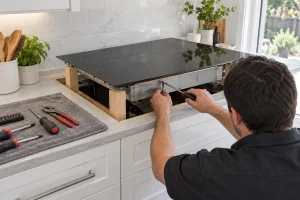
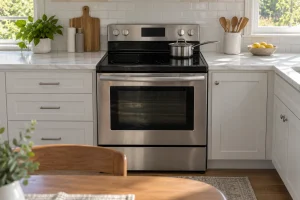
A range does two jobs in one cabinet, and a fault can hide in either half. Electrolux ranges in the Bay Area include 30 inch and 36 inch dual-fuel models with a gas surface and an electric oven, and induction ranges that heat cookware magnetically on an electric surface. We diagnose these ranges in San Francisco kitchens, from flats with a narrow galley run to larger houses across the peninsula and the East Bay.
On a dual-fuel range, a burner that clicks but will not light, lights unevenly, or goes out when the flame is turned down can point to a dirty or wet burner cap, a weak spark, or a problem in the gas path. On an induction range, a zone that never starts, stops mid-cook, or runs weak can come from the cookware itself, from a sensor, or from the power electronics under the glass. The same complaint can have very different causes, so we do not name a part until we have seen the range misbehave. Our post on an Electrolux range burner that works only some of the time walks through how the pattern of failure narrows things down.
Slow preheating, a cavity that never reaches the set point, uneven browning and a cycle that quits early are separate clues. A technician looks at the bake and broil elements, the oven sensor, the control that switches them, and the power feeding the range. A visibly glowing element with poor results suggests something different from an element that stays dark.
The oven door lock is a motorized latch used during cleaning cycles. When it sticks, the display can show a lock fault and the door stays shut, or it will not lock and the cycle refuses to begin. Latch motors, switches and the wiring between them are the usual areas, along with the control that reads their signal.
A dash on the display means the oven or cooktop controls are locked rather than broken. A keypad that responds to the wrong pad, or to nothing, is another story: moisture under the glass, a worn membrane and a failing control board all produce similar symptoms.
When an oven shows a fault, write the full code down exactly, with the letter, and note what you were doing when it appeared. These are the meanings for this family:
A code tells us which circuit complained, not which part has failed. A probe code, for example, can come from the probe, its connector or the board that reads it.
We begin by talking through what you saw, then look at the installation: how the range is supplied, whether it sits level and tight to the cabinets, and whether anything around it traps heat. With your permission we run the oven and the surface and compare their behavior against the symptom. Only after that do we test individual parts. You receive a written estimate before any repair begins, and nothing is repaired without your approval.
These are all outside the range and safe for a household member:
Do not remove panels, probe anything with a meter, or loosen gas fittings. Those steps are for a technician.
If you smell gas, leave the home without touching light switches or appliances and call the gas utility or 911 from outside. If you notice a burning smell, sparks, or smoke from the oven, switch the range off at the breaker. An oven that keeps heating after it is turned off, or an F10 reading, deserves the same caution: stop cooking and book a visit rather than waiting it out.
Dual-fuel and induction ranges share a look but not a parts list. The label usually sits on the oven frame, visible when the door is open. The prefix tells us a lot: ECFD marks a dual-fuel range and ECFI an induction one. Models include the ECFD3068AS and ECFD3668AS dual-fuel ranges, and the ECFI3068AS and ECFI3668AS induction ranges. Give us the full number when you request a visit and we can plan which tests to run.
You tell us the symptom, the full model number and any code that appeared. We arrive, inspect the installation, reproduce the problem where it is safe to do so, and explain what we found. The estimate comes in writing before work starts. If the repair needs a part that is not on the truck, we explain what is needed and agree the next step with you first.
For a view across the whole lineup, see our guide to Electrolux ranges. If the problem is limited to the oven cavity, the Electrolux wall oven repair page covers similar oven faults, and surface-only trouble on a separate unit belongs to Electrolux cooktop repair.
A dash means the oven or cooktop control is locked. It is a lock status rather than a failed part, and the owner guide describes how to release it. If the display stays locked or the pads do not respond, request a visit.
If there is no gas smell, sparking or burning odor, many people do continue to use the working half. The two halves share a control board, though, so a fault in one can spread. Switch the range off at the breaker if anything seems unsafe.
A pan must be magnetic and sit centered on the zone. If it is, the cause may be a sensor, a power fault or a control problem under the glass, and that needs a technician to confirm.
F10 is listed as thermal runaway, which means the oven temperature is rising beyond what the control expects. Stop using the oven, switch the range off at the breaker and book a visit.
The full model number from the label, the code or display message, a short description of what happens and when, and whether the range is dual-fuel or induction. Photos of the label help.
Electrolux ranges combine an oven and a cooktop in one 30- or 36-inch body, as induction or dual fuel. See the lineup,…
Electrolux induction and gas cooktop repair in San Francisco and the Bay Area, from rejected pans and dead zones to igniters and…
Electrolux dishwashers that leave dishes dirty, hold water or show a code, diagnosed under tight Bay Area cabinets with a written estimate…
Electric and gas Electrolux dryers with no heat, long cycles, odd noises or early stops, checked from the vent to the drum…
Soft food, heavy frost, a pooling drain or a loud fan: Electrolux freezers diagnosed and repaired across San Francisco and the Bay…
No ice, thin cubes, a jammed chute or water on the floor: Electrolux ice makers traced from supply to mold across San…
Stacked Electrolux washer-dryer towers, electric or gas, repaired in closets and hallways around San Francisco and the Bay Area, one half at…
Repair for Electrolux built-in drawer and side-swing microwaves in San Francisco and the Bay Area, covering no heat, door latches and display…
Warm compartments, leaks, noises, dispenser trouble or a flashing code: diagnosis and repair of Electrolux refrigerators across San Francisco and the Bay…
Repair for Electrolux single and microwave-combination wall ovens in San Francisco and the Bay Area, covering heat, fans, door latches and displays.
Front-load and top-load Electrolux washers that will not fill, drain, spin or unlock, diagnosed in San Francisco and the Bay Area with…
Temperature swings, a cooler that stays warm, fogged glass or noisy fans: Electrolux wine and beverage coolers serviced across San Francisco and…
Share a few details and we’ll confirm an appointment. Prefer to talk? Call us and we’ll help right away.